Or listen on:





Today, southern resident killer whales are among the most endangered marine mammal populations in North America. Their survival is threatened by a combination of declining chinook salmon stocks, increasing underwater noise from vessels and industrial activity, and pollution that accumulates in their bodies over time.
Experts have been sounding the alarm for years, but the action needed to protect these whales isn’t happening fast enough. What happens when extinction is imminent but actual protections lags behind? In the season 2 premier of This Is Wild, we explore the challenges facing these remarkable orcas and the choices we must make to recover them.
“The killer whale was last year voted to be the icon of [B.C.]. It is a culturally significant species for every First Nation on the coast. I struggle to think of a species that is more entwined in our cultural narrative, both the settler population and the Indigenous population. So it does give me pause to think that we would be starting here with killer whale extinction. If we're willing to trade off southern resident killer whales, I am concerned that there's not a lot that we're not willing to do.” – Margot Venton, lawyer, Ecojustice
ALIYA JASMINE: It’s August 2018. A warm, windless day on the Salish Sea, the interconnected network of coastal waters between the southern half of Vancouver Island and the mainland. Under the surface, a southern resident killer whale, designated J35 by researchers, but fondly known as Tahlequah, has just given birth. It’s a girl. But, within the hour, Tahlequah’s calf dies. This is a huge blow for this endangered population. Today, there are only around 75 of them left in the wild. For the next 17 days, Tahlequah carries her deceased calf on her snout across an estimated 1,500 kilometres. By the sixth day, weakened from the effort of trying to keep the calf afloat, she begins to fall behind her pod. That’s when other members of her pod take turns carrying the body while Tahlequah rests. It’s a remarkable display of the bond between these animals. The story makes international headlines. Millions of people who had never thought about killer whales before found themselves invested in this mother’s vigil. Scientists are careful with language; they don't use the word “grief” professionally. But many people, including the Center for Whale Research, began calling Tahlequah’s vigil a tour of grief. That’s certainly what it appeared to be. It was a call for help that conservation advocates could not ignore.
ALIYA JASMINE: I’m Aliya Jasmine. I’m a wildlife filmmaker and environmental journalist. On this podcast, we’re meeting the incredible species that call Canada home - and the people working to protect them. From WWF-Canada, you’re listening to This Is Wild.
HUSSEIN ALIDINA: I think it’s remarkable, from just learning and hearing about them, but also hearing from people speak about them, just how intelligible these animals are.
ALIYA JASMINE: This is Hussein Alidina. He works at WWF-Canada as their lead specialist for marine conservation. And he’s based on Vancouver Island—a perfect place for keeping an eye on killer whales.
HUSSEIN ALIDINA: You know, in many ways how close they are to humans on an emotional scale. The fact that they live in pods and they’re matrilineal and they’re so communal that they will catch and share food. It just reflects at such a deep level the kind of society they are.
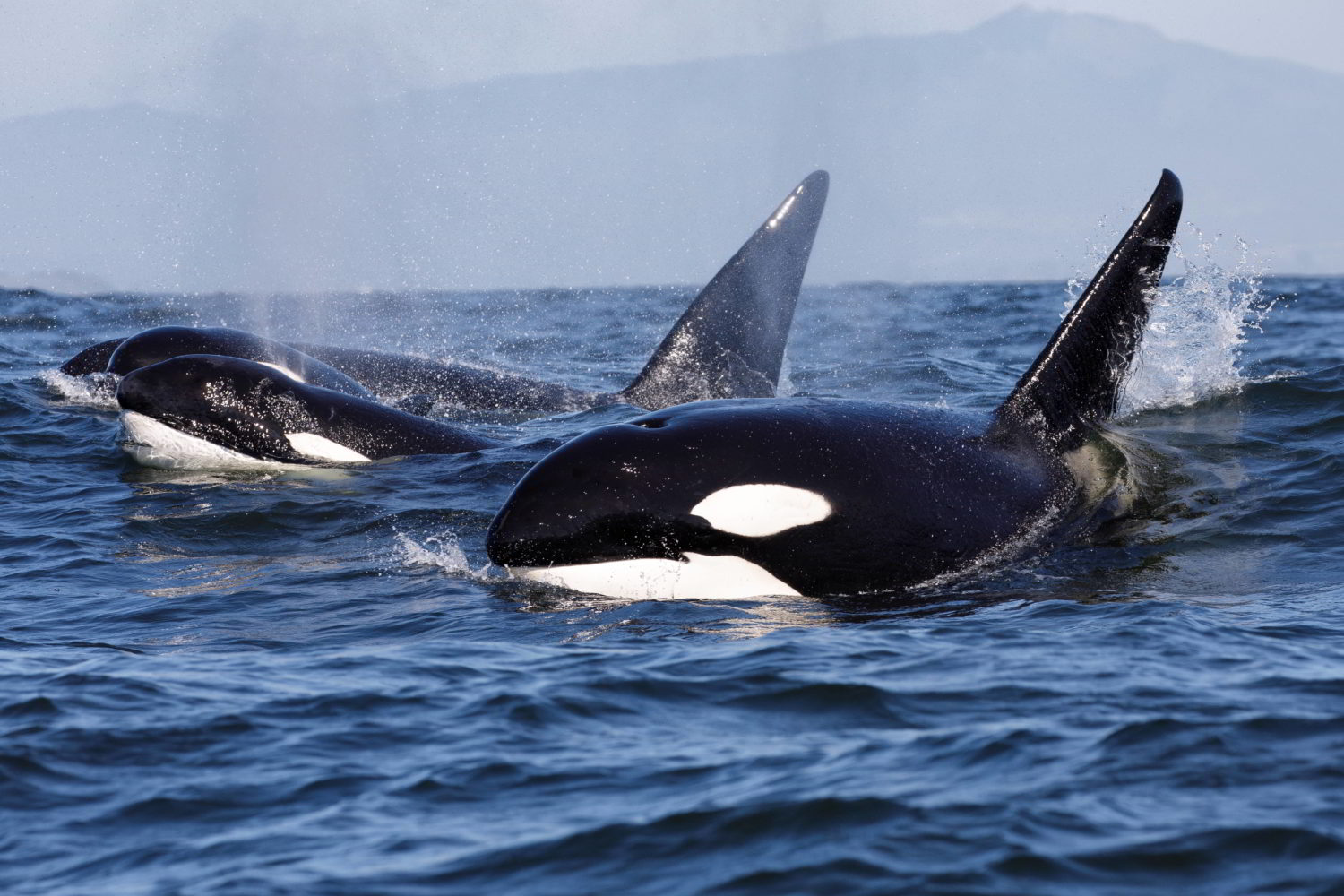
ALIYA JASMINE: They are easy to recognize. Black on top, white underneath. Up to 10 metres and weighing about 11 tons. And despite having the word “whale” in their name, they're technically the largest member of the dolphin family. The west coast is home to three types of killer whales: transients, offshore, and residents. All of these groups, as well as their relatives around the world, are also known as “orcas”, a name that comes from the Latin word for “a large-bellied vessel”, which is probably a reference to the shape of their bodies. This word was adopted into the species' formal scientific name, Orcinus orca, and eventually, it was picked up by the public as a gentler alternative to “killer whale”. The southern resident killer whales are one of the most iconic and imperilled wildlife populations in Canada. There are three distinct pods, labelled J, K, and L, that swim B.C.’s south coast, and down into Washington and northern Oregon. Scientists have named and tracked them since 1976. When one dies, everyone knows who was lost. And while other orca populations exist throughout the world's oceans, the different groups don't interbreed - and many have developed their own distinct diets, behaviours, and even dialects! So, if a population like the southern residents were lost, it wouldn't just be a loss of numbers. It would be the permanent disappearance of a culture.
HUSSEIN ALIDINA: And in the case of southern resident killer whales, there's a couple of things that make them unique. One is their diet in that they feed almost exclusively on chinook salmon, the largest and the fattiest of the salmon species that are available in this area. They're also unique in some ways with regards to the dialect that they have and the way they communicate. Orcas generally are quite vocal, and they use sound not only to communicate between, you know, their pods, but also as a way to navigate and find food.
ALIYA JASMINE: Like other dolphins, orcas live in dark ocean environments and rely on echolocation, a process that lets them sense the world around them by listening to the echoes of their clicks as they bounce back through the water.
HUSSEIN ALIDINA: So researchers have found that these whales have their unique dialects, even within the Southern resident pod, there's some dialects between pod to pod, but clearly some of those communication signals are unique to the southern residents.
ALIYA JASMINE: And while it’s nearly impossible to know what they are saying, one thing is for sure: they are very social animals.
HUSSEIN ALIDINA: We ourselves don't understand whale talk. You know, we can't decode whale talk. But you know there are certain behaviors I think scientists associate with certain vocalizations or sounds. You could find unique vocalizations when a mother and a calf are interacting, for instance. You could find a unique set of vocalizations when orcas all come together in a superpod and there's so much excitement the chipper and the chatter is just out of this world. If you ever have an opportunity to hear it is just amazing.
ALIYA JASMINE: Females like Tahlequah can live 90 years or more. They can carry up to five calves in a lifetime. It’s up to matriarchs like her to carry decades of accumulated knowledge - guiding multigenerational pods to the best salmon migration routes and safe foraging areas. But the Salish Sea is changing. The southern resident killer whales are struggling - caught in the grip of three intensifying threats. The first threat? Food - or lack thereof.
HUSSEIN ALIDINA: Chinook salmon stocks are depressed because they have faced a number of things. You know, they were over-fished. A lot of the habitat that the Chinook salmon need for spawning has been lost or destroyed.
ALIYA JASMINE: Destroyed by development, agriculture, forestry and rising water temperatures. And even when salmon are available, the southern residents are struggling to find them. Which leads us to our second threat: noise.
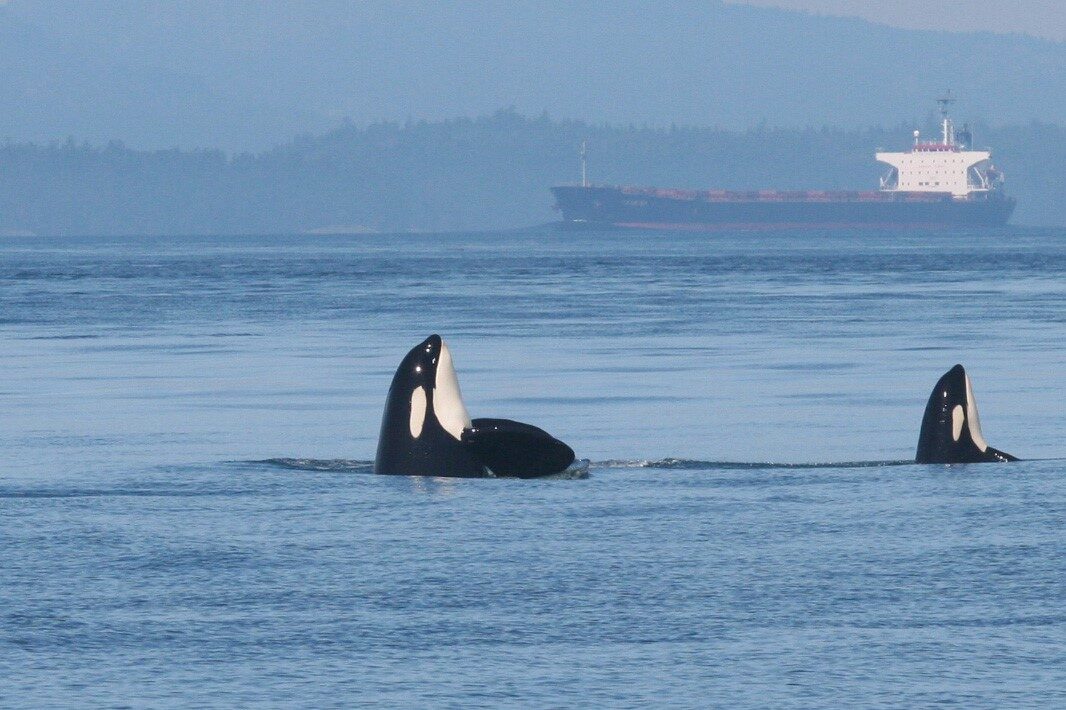
HUSSEIN ALIDINA: The other threat around disturbance and noise is really caused by the kind of activity we have in the water or close to the water, and the Salish Sea, which is the critical habitat of the southern residents is the busiest part, you know, on the coast, right? There's a lot of traffic from ships and vessels, small boats and large boats, a lot of this traffic is generating noise that acoustically is interfering with the ability of southern residents to communicate.
Orcas use their echolocation skills to find food and send messages to their pod about where their next meal might be. But the noise that Hussein is describing means that the orcas aren’t able to hear those messages.
HUSSEIN ALIDINA: And the third threat that is significant is really around contaminants. And some of the contaminants that are legacy contaminants that are phased out, but that still persist in the environment and in the food that, that cause issues in, in the tissues of these whales. And, you know, these are things like, organic compounds that were in use in the past, like DDT, but there's also newer classes of compounds like flame retardants that do end up in the food chain and that do end up accumulating in these orcas.
ALIYA JASMINE: Contaminants enter the food chain at the very bottom, absorbed by tiny organisms in the water. With each step up the food chain, they accumulate, so by the time they reach an apex predator like an orca, they're highly concentrated. These contaminants can disrupt hormones, impair the immune system, and reduce reproductive success. They can even be passed on to a mother’s calves through nursing. And the diminishing Chinook salmon supply actually increases the impact of these contaminants on orcas. If a whale doesn’t eat enough, it starts to burn its fat reserves for energy. Contaminants stored in its blubber are released into the bloodstream. This exposes the body to higher circulating levels of these toxins just when the animal is already under nutritional stress. Combined, these three threats - low Chinook salmon numbers, increasing noise, and contaminants - are making it harder for the southern resident killer whales to thrive. In fact, over 75% of southern resident pregnancies fail, and of the calves that do survive, only 58% make it to adulthood. In 2001, the southern resident killer whales were assessed as endangered by the Committee on the Status of Endangered Wildlife in Canada, also known as COSEWIC.
EMILY GILES: What they are is an independent scientific advisory committee and they provide recommendations to the government on Canada's wildlife.
ALIYA JASMINE: This is Emily Giles. She’s part of WWF-Canada’s science, knowledge, and innovation team.
EMILY GILES: COSEWIC meets twice a year and they review a list of candidate species that might be at risk of extinction. And they follow a really specific list of criteria to review the best information that they have on hand about that species and see if it fits the criteria to designate that species or population as extinct, extirpated - which means locally extinct, endangered, threatened, special concern or not at risk.
ALIYA JASMINE: When COSEWIC determines that a species is at risk, it submits its findings to the federal government, which then must respond and decide whether to formally list that species under the Species at Risk Act, also known as SARA. SARA is a law that requires the government to identify, protect, and help recover species that are at risk of extinction due to human activity.
EMILY GILES: And all of the timelines and steps for that process are very well laid out and mandated through the Species at Risk Act. They'll start to look at potential social, economic, political implications of what that listing might be. Because COSEWIC doesn't look at that. They just look from that, that scientific perspective. And then once the review process is done, the governor and council takes all of this information and makes a decision on whether or not they're going to list the species. So the government has to produce a recovery strategy within one year for any endangered species and within two years for any threatened or extirpated species.
ALIYA JASMINE: But it can be difficult to stick to these timelines due to consultations, scientific complexity, and competing interests. The southern resident killer whales were assessed by COSEWIC as endangered in 2001 and formally listed under the Species at Risk Act two years later. But it took five more years after that for the government to produce a recovery strategy for them. That plan included objectives around increasing the whales’ food supply, and reducing chemical and biological pollutants, as well as disturbances from ships and underwater noise. It also identified their critical habitat. That’s when Ecojustice, Canada's largest environmental law charity, stepped in. Their concern was not just where the whales’ critical habitat was, but what should be legally protected within it. They went to court to make sure those essential things like food,
water quality, and a healthy acoustic environment were genuinely, legally protected - not left to vague policies and guidelines. The case began in 2008 and later went to the Federal Court of Appeal.
MARGOT VENTON: So the Species at Risk Act says, in the case of a federal species like the Southern Resident Killer Whale, you have to create a document called a recovery strategy. In that recovery strategy, you need to identify critical habitat.
ALIYA JASMINE: This is Margot Venton. She’s a lawyer with Ecojustice and also the director of their nature program. She has been on the Southern Resident Killer Whales file for nearly two decades.
MARGOT VENTON: And so the lawsuit was all about what are you legally protecting? Our concern was that the way that the government was interpreting what is critical habitat and what constituted legal protection really left the whales quite vulnerable. What all the scientists wanted was the protection of the biological attributes of the habitat that were necessary for the whales.
ALIYA JASMINE: They wanted enough chinook salmon for the whales to eat, for the noise to be kept at a level that didn’t interfere with their communication, and for the water quality to be protected from further pollution. The government's position was that guidelines that were already in place for whale watching, and for water quality, were sufficient. Ecojustice disagreed. And the courts agreed with Ecojustice.
MARGOT VENTON: So as a consequence of that litigation, like as a consequence of that lawsuit, there is now in place something under the Species at Risk Act called a critical habitat protection order. And that is supposed to legally protect from destruction all the biological attributes that have been identified as important for the killer whales in the Salish Sea.
ALIYA JASMINE: It was a significant win. But they were still waiting for the required action plan, which would outline what the government would actually do to protect and recover the whales. Unlike the recovery strategy, it had no firm deadline. Meanwhile, the southern residents continued to decline. Then in 2017, fourteen years after the southern residents were listed under the Species at Risk Act, and nine years after the recovery strategy was released, they finally got their action plan.
HUSSEIN ALIDINA: I remember clearly reviewing it and providing WWF comments to the process saying the action plan was really light on action. Unfortunately, it dealt with more research questions to be answered than actually threats to be managed. And this was one of our biggest critiques of the plan. So 14 years later, from the point of being designated to an action plan was number one, too long. And the product we had was not really focusing on the kind of threat reduction we needed to see.
ALIYA JASMINE: Attempts to get the government to help the southern resident killer whales were slowly inching the needle towards recovery. But it wasn’t enough. Then came the summer of 2018. And Tahlequah’s tour of grief. That summer, she became an unlikely hero in the fight to save her species. The story of Tahlequah and her calf was carried by news outlets around the world, shining a spotlight on the southern resident killer whales and the threats they face.
SKY NEWS UK ANCHOR: “A killer whale has finally parted with the body of her dead calf after carrying it on her back for 17 days.”
ABC AUSTRALIA ANCHOR: “Well a remarkable and very public case of grieving has captured world wide attention in the past two weeks. This isn’t about a human, this is about a grieving female whale.”
CBC ANCHOR: “Whales have been known to carry their dead offspring and it's believed to be part of a grieving process that scientists don’t fully understand - but to carry it this long is unprecedented.”
ALIYA JASMINE: Under this spotlight, Ecojustice and a coalition of conservation groups (including WWF-Canada) pushed for an emergency order, a legally binding directive that can immediately restrict activities threatening a listed species' survival. The emergency order was denied, even after the government determined the whales faced imminent threats to their survival and recovery. But Tahlequah's tour was not in vain. The world was watching.
HUSSEIN ALIDINA: It forced the government's hand in 2019 to make some announcements of measures.
ALIYA JASMINE: And these measures, finally, helped. Instead of just studying the threats facing the whales, they began putting real limits on the human activities that were harming them.
HUSSEIN ALIDINA: There was a number of things that came out from those measures that were positive. You know, some of the closed areas for salmon, some of the restrictions around where boats could be, you know, the distance to stay away from the whales. At the same time, the commercial shipping sector moved forward on slowing down in these habitat areas, which reduced the amount of noise being exposed, these whales being exposed to. So these measures have provided some benefit for the whales. They were much better than what the action plan had done in 2016.
ALIYA JASMINE: Some successful measures came from the government. Others came from outside it. For years, WWF-Canada has been warning about the threat of underwater noise and trying to convince industry to reduce it. As part of that mission, they’ve participated in the ECHO program, an initiative by the Port of Vancouver that brings together advisors from the shipping industry, government agencies, scientific and environmental organizations, and First Nations, to talk solutions.
HUSSEIN ALIDINA: One of the things that initiative has done is try and pilot these slowdowns of vessels as a means to try and reduce the noise that is being put out by these vessels in a particular area. And so there's a number of slowdowns through Harrow Strait and Boundary Pass and Swift Shore Bank that the ECHO program has implemented over many years. And that program has reduced on a seasonal basis, the noise that comes from vessels into the habitat by about two to three decibels. And that's a good amount.
ALIYA JASMINE: The program works. When ships slow down and adjust their routes, underwater noise drops. But when the initiative is voluntary, it isn’t always enough. In 2025, an average of 85% of ships travelling through the area complied with the speed guidelines. It was good participation, but the noise reductions were only a small portion of what’s actually needed to help the southern resident killer whales.
HUSSEIN ALIDINA: But to give you a bit of context into how much more elevated the noise in the Salish Sea is because of vessels, we're elevated over natural levels, probably, at a scale of 15, maybe even 20 decibels, the shipping component of the Salish Sea, depending on where you are dominates what we call the soundscape of the Salish Sea.
ALIYA JASMINE: And unfortunately, the worst was still to come. Here’s Margot Venton from Ecojustice again.
MARGOT VENTON: I guess our concern has been that while some of the measures that have been taken have been helpful and that’s important to acknowledge the measures have not gone far enough to address the problem, and we keep stacking on the threats.
ALIYA JASMINE: For many years, Canada’s oil industry has been looking to expand its reach in other countries. As part of that effort, the federal government approved an expansion of the Trans Mountain pipeline, which carries oil from Edmonton, Alberta, all the way to the west coast of B.C. When the new pipeline opened in spring 2024, it directly led to seven times more tanker traffic—right through critical habitat for southern resident killer whales.
MARGOT VENTON: What the evidence indicates now is that the gains that were made through the voluntary slowdowns under the conservation agreement, those have all been lost now because of the tankers.
ALIYA JASMINE: The threats keep coming. And this wasn’t the only major project raising concerns for the whales. In Delta, B.C., just south of Vancouver where the Fraser River meets the sea, lies the Roberts Bank Wildlife Management Area. It’s critical habitat for birds and fish, including the juvenile chinook salmon that southern resident killer whales need to survive. It is also home to the Roberts Bank Superport, the largest container ship terminal in Canada. Years ago, the Port of Vancouver proposed an expansion of the terminal that will increase its capacity by 50%. But in 2020, a government panel found that a Roberts Bank expansion would have a very real negative impact on the southern residents. It would increase vessel traffic, which would increase underwater noise. And it would also destroy that chinook salmon habitat, which would lead to even less food for the whales. But they approved Roberts Bank Terminal 2 anyway. The approval is subject to hundreds of conditions that are supposed to help monitor and reduce the project’s impacts on nature, wildlife, and Indigenous communities. But, in the summer of 2026, the government referred Roberts Bank to its Major Projects Office, which is dedicated to getting important projects built faster. At the same time, they proposed building another oil pipeline from Alberta to that new terminal. If they decide Roberts Bank is important enough, that could mean replacing the usual approval process under the Species at Risk Act with an accelerated version. In which case…what happens to all of those conditions? For now, it’s a waiting game. At the moment, the Canadian government is very focused on finding new trading partners and building new infrastructure. Some people might argue that projects like pipelines and terminals are crucial for Canada’s economy. They might say that, if you do things right, it’s possible to build and protect wildlife at the same time. But if you’re trying to do things as quickly as possible, it’s hard to do them right. Here’s Hussein from WWF-Canada again.
HUSSEIN ALIDINA: I really want to appeal to the public about the space we are in right now in Canada. And the narrative is that, you know, we have to do this for our future or we have to do this to be strong Canada. This is the time to focus on Canada and sort of move away all these obstacles. But, you know, nature is not an obstacle. We do need nature. We have to change the narrative about the way our leadership thinks about this. Right. And we can have prosperity and nature together. You know, we have to be smart about the way we do it. And we have to be really respect nature and other life at the end of the day.
ALIYA JASMINE: The Species at Risk Act was designed to ensure a species would never be abandoned in the name of development. But the push to build projects like pipelines and terminals faster means that some of its strongest tools are now on the chopping block. Even if those projects push these species closer to extinction. All of this leaves southern resident killer whales with fewer and fewer safeguards as the pressures on them continue to mount. It isn’t that solutions don’t exist.
HUSSEIN ALIDINA: There are ways to quiet ships. You know, the Navy has had quiet vessels for many, many years. There's design considerations that can reduce the level of noise in vessels… So there are ways in which this could be done.
ALIYA JASMINE: The challenge isn't technology. It's whether governments and industry are willing to mandate it.
HUSSEIN ALIDINA: In fact, the new projects that are being built and bringing the ships here, you could have a condition that says, the project will not accept any ships that do not meet this standard of quiet. The problem at the end of the day is the will and the incentives that are created to, to move or not being created to move in that direction, unfortunately.
ALIYA JASMINE: In 2024, Tahlequah lost another calf. Again, she was seen carrying it - through the same waters the law says are protected, the same waters getting louder and emptier every year. The southern resident killer whales are showing us, in real time, what happens when action lags behind science. In May 2026, the government of Canada proposed a new law that would exempt certain development projects from having to meet all of the requirements outlined in the Species at Risk Act. After facing backlash from conservation groups and Indigenous peoples, the government decided to delay a decision about the new legislation until the fall of 2026. Here’s Emily Giles from WWF-Canada again.
EMILY GILES: We know that for the southern resident killer whales, extinction is a high probability for them within the next few decades. I still think there is a chance to save them and there is an opportunity to save them. We’re not quite yet at that level where scientists would say they can’t be saved. But it’s really, really critical that we don’t delay and we have to take action to help them now.
ALIYA JASMINE: The stakes of what we do now go beyond the survival of these whales. They have become a test of Canada's commitment to protecting all our wildlife.
MARGOT VENTON: What would they say no to, if not this? I mean, the killer whale was last year voted to be the icon of British Columbia. It is a culturally significant species for every First Nation on the coast. You walk around and there's killer whale images everywhere. They're on the Canucks jersey. I struggle to think of a species that is more entwined in our cultural narrative, both the settler population and the Indigenous population. So it does give me pause to think that we would be starting here with killer whale extinction. If we're willing to trade off southern resident killer whale, I am concerned that there's not a lot that we're not willing to do.
ALIYA JASMINE: From conservation groups the plea is clear, simple, and urgent:
HUSSEIN ALIDINA: This is another life form here that shares the space and the planet with us. You know, the things we are doing as a society are affecting this population and these animals. And we have it within our abilities to prevent that. And we have a moral imperative to do so now that we know. And that's why I'd encourage everyone who's listening to this to really take that to heart. We know better. We have to do better. It's our responsibility to do better. And we need to do that better because we're part of the same circle of life that the whales are.
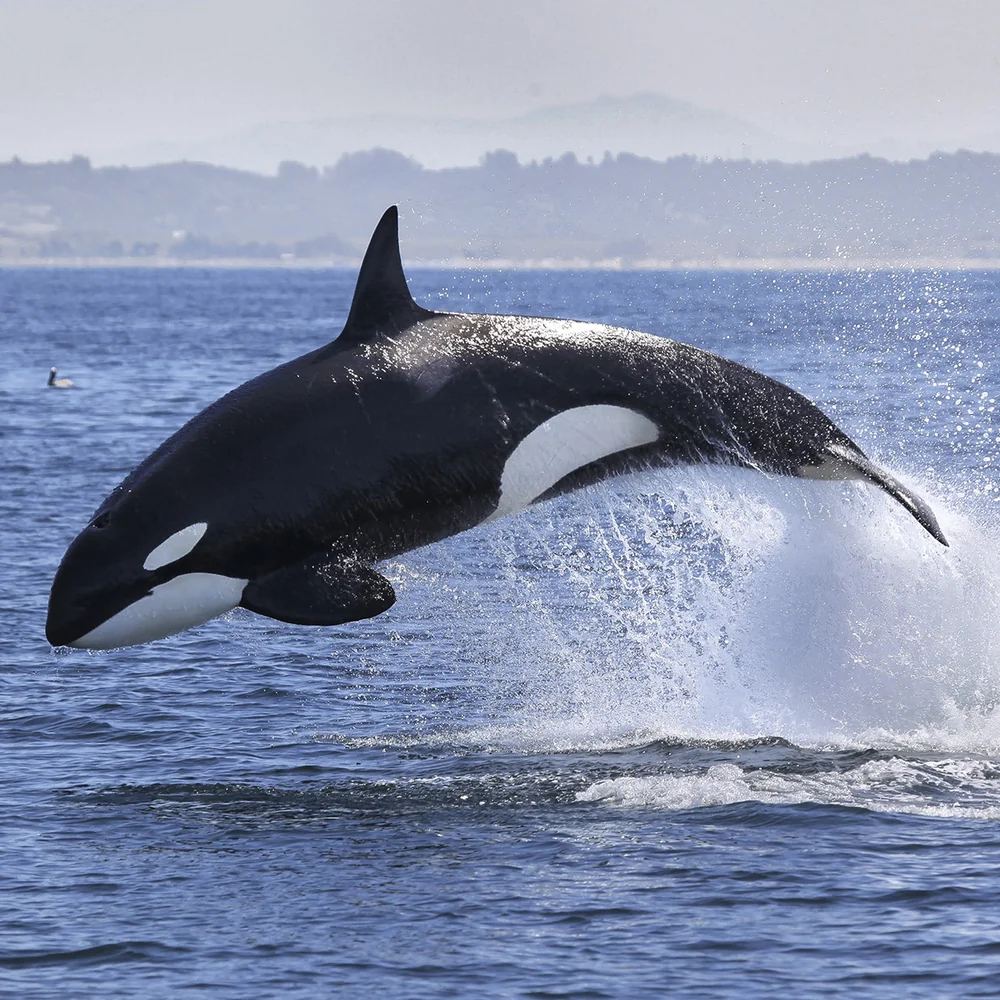
ALIYA JASMINE: Today, the southern resident killer whales are still here. They still gather in the Salish Sea. Still chatter back and forth. Sometimes they breach the surface. Perhaps they’re having fun. Between the deaths of her calves in 2018 and 2024, Tahlequah gave birth to a male in 2020. He survived. The population remains endangered. But the story isn't over.
HUSSEIN ALIDINA: You know, I don’t think anyone of us working on this are ready to give up. I think the opportunity is now, the lessons we’ve learned as a society over all these decades are clear. What needs to be done is even clearer. I think we have to appeal to our morality to do the right thing. That's not a hard thing to do. We need to hold our governments and our leaders accountable. As many Indigenous people would say, we need to do things in a good way.
ALIYA JASMINE: The science is clear. The tools exist. The question is whether we’ll use them in time.
THEME MUSIC
ALIYA JASMINE: Thanks for joining us today on This Is Wild! I'm your host, Aliya Jasmine. To learn more about WWF-Canada's initiatives to protect southern resident killer whales, and what you can do to help, head to WWF.ca/thisiswild. And to learn more about everything going on at WWF-Canada, you can sign up for our newsletter, Living Planet News! The link is in the show notes. This Is Wild is created by WWF-Canada and Antica Productions. Our executive producers are Laura Regehr and Stuart Coxe. Our producer is Emily Morantz. This episode was written by Joanne O’Sullivan. Our production team at WWF-Canada is Joshua Ostroff, Erin Saunders, and Tina Knezevic. Nicole MacAdam is WWF-Canada's SVP of Strategic Communications. Mixing and sound design by Philip Wilson.

Aliya Jasmine “AJ” is an award-winning filmmaker, environmental journalist and public climate storyteller whose work sits at the intersection of climate solutions, wildlife and belonging. Her stories have appeared on CBC, NBC News, MTV News, Discovery Channel, and Smithsonian Channel, and she has built a large trusted online community through years of broadcast journalism, digital-first reporting and environmental storytelling. AJ is Founder and CEO of Earth Tones, a purpose-driven media company amplifying underrepresented voices in environmental storytelling. AJ directed, wrote and produced Bird Names, a CBC Short Docs documentary with an impact campaign spanning private, public, academic and conservation-facing screenings. She is also directing Lion Bridge, an independent feature documentary about Los Angeles’ urban mountain lions and the Annenberg Wildlife Crossing, and developing Hot Flashes, Cold Oceans for CBC’s flagship science/nature series The Nature of Things.