Or listen on:





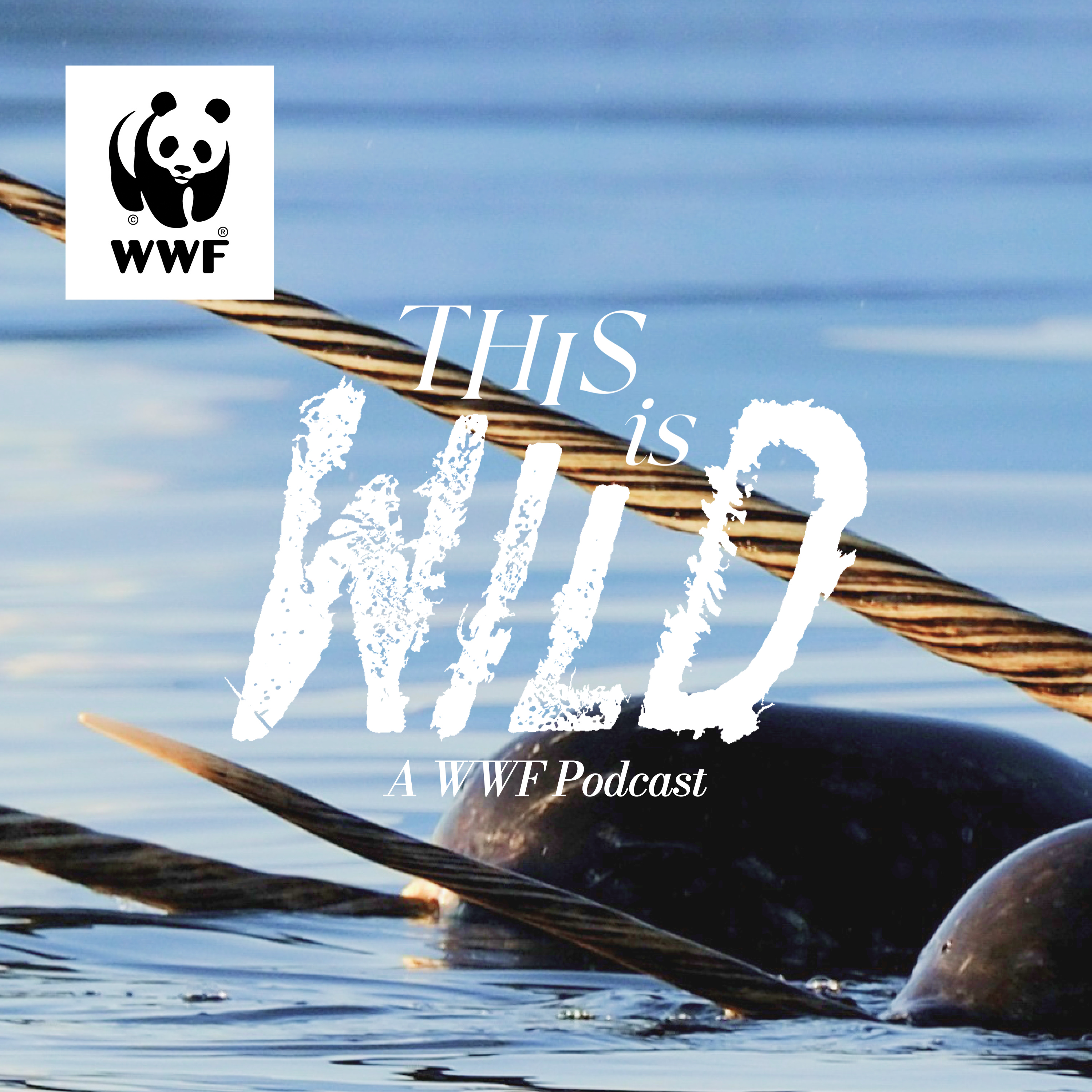
Some people still think narwhals are as mythical as a unicorn, but these remarkable Arctic whales are very real — and so are the threats to their existence.
This episode of This Is Wild explores their mysterious live, remarkable adaptations and incredible overwintering grounds, the polynya known as Pikialasorsuaq.
Home to 90 per cent of the world’s narwhals and the High Arctic's most biologically productive region, this area of open water surrounded by sea ice is nestled between Nunavut and Greenland.
Pikialasorsuaq has also always been a vital hunting ground and travel route for Inuit communities in Nunavut and Greenland. Now, with climate threats rising around them, they’re working across international borders to conserve it.
The future of narwhal, and the people who depend on this remarkable place, may hinge on safeguarding the Arctic’s greatest oasis.
"Narwhal are so good at staying hidden in their environment... They're sort of rolling in the water when they surface so low that it almost looks like a little tiny wave. You catch a glimpse of this little sparkle or shimmer on the water. One community member from Ikpiarjuk, which is Arctic Bay, said that they shine bright like a diamond, like Rihanna, which I thought was really, really funny." — Dr. Courtney Shuert, marine mammal biologist
MeganLeslie: Hi, I'm Megan Leslie, President and CEO ofWWF-Canada. We create podcasts like This Is Wild because stories help us to seenature differently. But storytelling is just the tip of our conservationiceberg. Every day, we're working alongside communities, researchers,governments, and partners to help protect and restore nature across Canada. Inthis episode, you'll learn about one of Canada's most mysterious animals,narwhal. When you give to WWF-Canada, you're supporting our conservationefforts in the Arctic waters that are critical to the survival of narwhal andcountless other marine mammals. So whether it's protecting species and theirhabitats, advancing conservation science, or supporting community-ledstewardship, we're working to create a future where people and wildlifeflourish together. If you enjoy This Is Wild and want to help make that futurepossible, please consider making a donation to WWF-Canada. Visit the shownotesfor a link to donate, or go to wwf.ca/donate to learn more. Thanks for listening.Now, please enjoy this episode of This Is Wild.
AliyaJasmine: It's a cold winter's day in Nunavut, whichis really saying something north of the Arctic Circle. Looking out at theArctic Archipelago, it's almost impossible to tell where the snow-covered landends and the sea ice begins. When the sun sets for the last time at the end ofNovember, sending the Arctic into a months-long polar night, the frozenmonochromatic landscape is lit only by the night sky and the kaleidoscope ofthe northern lights. Yet from the ice floe edge off Ellesmere Island, there'san extraordinary sight: open water teeming with life. This is the North WaterPolynya. But it goes by many names. Inuit from Greenland call it thePikialasorsuaq, which means "the great upwelling". Inuit in Canadarefer to it as Savarjuaq, meaning "the place where the water neverfreezes". Averaging about 20,000 square kilometers in the winter and80,000 square kilometers in the summer, this polynya is the largest area ofyear-round open water in the Arctic, and the most biologically productiveregion north of the Arctic Circle. And among the hundreds of seabirds diving inand out of the water swim some of the most mysterious and fantastical beings inthe ocean: narwhals.
I'm Aliya Jasmine. I'm a wildlife filmmakerand environmental journalist. on this podcast we are meeting the incrediblespecies that call Canada home and the people working to protect them. FromWWF-Canada, you're listening to This Is Wild.
Narwhals are a species of whale that arehighly specialized to their Arctic home. Despite being known as the charismaticunicorn of the sea, these whales are not well understood.
CourtneyShuert: They are quite elusive and pretty shycreatures, so they're quite good at playing hide and seek, I would say.
AliyaJasmine: That's Dr. Courtney Shuert. She's a marinebiologist who has studied how climate change might be impacting the migratorybehavior of narwhals.
CourtneyShuert: Narwhal are so good at staying hidden intheir environment, they actually kind of just barely come out of the water.They're sort of rolling in the water when they surface so low that it almostlooks like a little tiny wave. You kind of catch a glimpse of this littlesparkle or shimmer on the water. One community member from Ikpiarjuk, which isArctic Bay, said that they shine bright like a diamond, like Rihanna, which Ithought was really, really funny.
AliyaJasmine: If you were a European noble living in the10th century, you'd be forgiven for believing that narwhal tusks werelegitimate unicorn horns. Viking traders were selling narwhal tusks for morethan the cost of gold, and European royalty treated them as such. They carvedthe tusks into royal regalia, like Queen Elizabeth I's bejeweled scepter, orthe coronation chair of Denmark for King Frederick III. These so-called unicornhorns were said to have medicinal properties that could cure everything frompoisoning and plague, to gout, scurvy, and ulcers. Churches even put pieces ofthem in holy water. It wasn't until the 1630s that Danish scientist Ole Wormwas able to prove to Europeans that these unicorn horns were actually narwhaltusks.
ErinKeenan: I've met many people who are well-educatedwho don't even realize that narwhals are real. They think they're actually amythological creature.
AliyaJasmine: That's Erin Keenan. She's the seniormanager for Arctic Marine Conservation with WWF-Canada.
ErinKeenan: I can't think of any other animal that Ican say that about.
AliyaJasmine: While narwhal tusks aren't exactly thewonder drug the Vikings promised, the actual science is still prettyastonishing, not just because of their mystical appearance, but becauseresearchers still aren't sure what narwhal tusks are for. Here's CourtneyShuert again.
CourtneyShuert: We've only really been observing narwhal inscientific research for maybe the last, you know, 150, 200 years. There isstill a lot of things that we're learning and we're kind of surprised about.
AliyaJasmine: Technically, narwhal tusks aren't eventusks. They're actually an elongated left canine tooth that extends out in aspiral and can reach up to three meters long.
CourtneyShuert: So narwhal are only born with two teeth,uh, two upper canines. Typically, only the left one erupts into that tusk.Sometimes you get animals that will have both tusks erupted, so you'll have adouble tusker, which is pretty cool to see. I've never seen one myself, butI've seen museum specimens with them. And these tusks are modified teeth. So ifyou imagine, if you imagine one of your teeth kind of coming out of your face.It's not quite like, say, a walrus tusk where it's coming just out of the mouth.It actually sort of bends the upper jaw bones out a little bit. So it kind ofcomes above the lip through the face.
AliyaJasmine: What's more, these tusks are a narwhal'sonly teeth. Narwhals have no functional teeth in their mouths. Instead, theyare what's known as suction feeders, meaning they suck in water like a vacuumand swallow their prey whole. No teeth needed.
CourtneyShuert: They don't have teeth to grasp, say, like aorca whale or something like that.
AliyaJasmine: More recent studies have found thatnarwhal tusks are actually more like a complex sensory organ, a livingappendage. They have up to 10 million nerve endings that connect directly tothe whale's brain on one side and millions of surface pores on the other,making them highly sensitive to the outside environment. Researchers believethat their tusks might be used to detect things like weather, watertemperature, pressure, salinity, and may function like an early warning systemfor freezing ice.
CourtneyShuert: If you imagine you're drinking a reallycold beverage all of a sudden, like you can sort of feel it in your teeth,right? So there's some evidence, yeah, that maybe they're using that tooth as asensory organ. So being able to sense changes in, say, water temperature orpotentially even chemistry could be one of the reasons why, why it's there.
AliyaJasmine: One thing that is clear though, theirtusks aren't necessary for survival. Some males have none. Some have two. Fewerthan 15% of female narwhals have them. Yet females can live up to 100 yearsold, which is significantly longer than their male counterparts. Because ofthis, researchers believe that the main purpose of a narwhal's tusk is toattract a mate.
CourtneyShuert: So something that signals mating quality oroverall fitness, you know, the longer, the better sort of situation. If youhave a big tusk and you've been carrying it around for a long time, you'reprobably of a nice stock to breed.
AliyaJasmine: Inuit going back thousands of years haveobserved narwhals floating near the top of the water with their tusks pointingupwards. In fact, one of the Inuit names for narwhals is "Qilalugaqgernertaq", which means the one that points to the sky.
CourtneyShuert: There's been some documented cases wherewe've seen a group of males socializing together. So they're just sort of allrubbing on each other and moving around each other. The tusks end up coming outof the water, I think partially, you know, so that they don't, you know, whackinto somebody else or accidentally poke somebody. Especially if you imagineyou're trying to surface in a very small gap in the ice, you might want tostick your head out with your tusk rather than, you know, potentially risk rammingit into a piece of ice at the other side. I think a lot of people when they seephotos of, you know, males doing this tusking behavior, they think, yeah, oh,they're sword fighting. I think it's more that they're sizing each other upand, you know, kind of establishing maybe social hierarchies or something likethat.
AliyaJasmine: Narwhals are a highly specialized Arcticspecies with narrow habitat and prey requirements which make them especiallyvulnerable to changes in their environment. They live in the Arctic waters ofCanada, Greenland, Norway, and Russia, traveling in pods of about five to 10whales. But different pods sometimes come together to migrate in groups made upof hundreds or even thousands of whales.
CourtneyShuert: They are very social. You won't typicallysee a single narwhal by itself. They kind of form these fission-fusion groupswhere they're with some buddies for some time, but then they'll go off and joina different set of buddies and kind of move around. We'll see different groupswith different makeups, so some where it's just a mom and a calf, or maybe twomoms and two calves. Other times, maybe a whole bunch of bachelor males alltogether kind of hanging out, maybe with some juveniles mixed in there.
AliyaJasmine: Narwhals spend their summer in the shallowcoastal waters of the Canadian high Arctic Archipelago. In fact, Canada hostsover 80,000 narwhals each summer, which is about 90% of narwhals on the planet.Then every winter, they migrate to deep offshore waters, like thePikialasorsuaq.
ErinKeenan: You can think of it sort of the same waythat you might think of an oasis in the desert.
AliyaJasmine: That's Erin Keenan from WWF-Canada again.
ErinKeenan: Things like narwhals, bowhead whales,seals, other marine mammals, they are all air-breathing. So even though they'reliving in this ecosystem where there's a lot of sea ice, they still need to getaccess to air in order to breathe throughout the winter.
AliyaJasmine: The Pikialasorsuaq is a triangle-shapedregion of deep open water, sandwiched between Canada and Greenland, andsurrounded on all sides by thick sea ice.
CourtneyShuert: Narwhal seem to really prefer high icecover areas, especially in the wintertime, so anywhere from, you know, 90 to99% ice cover. A lot of their prey base is directly tied to sea ice. The wholeecosystem in general is reliant on the productivity feedbacks that happenbecause sea ice exists. So there's a whole community of plankton that livewithin the brine channels in the sea ice itself that kickstart the springbloom. That in turn feeds the zooplankton, and feeds all the way up to the fishthat narwhal rely on.
AliyaJasmine: Narwhals are also dependent on sea ice toprotect them from predators.
ErinKeenan: Killer whales can't really come into theArctic in the wintertime because they have large dorsal fins, so they can'tnavigate around sea ice.
AliyaJasmine: Narwhals, on the other hand, don't havedorsal fins at all. They can glide smoothly under sea ice, and even break itwith their backs if they need to, which allows them to live comfortably in theArctic all year round. But that doesn't keep them as safe as it once did.
ErinKeenan: With more and more of the Arctic opening upin the summer from melting sea ice, killer whales tend to spend more time inthe Arctic than they would have previously.
AliyaJasmine: But as important as sea ice is fornarwhals, it can also pose a massive threat to them. Courtney says it's adouble-edged sword to live in a highly dynamic sea ice environment.
CourtneyShuert: The sea ice is not a static platform allthe time. You know, sometimes these breathing holes that you have access tomight shift if the wind picks up just a little bit, moves that ice around, oryou can see the sort of tidal cycles with the sea ice. It's quite flexible, andit also blows around quite a bit. So it's not typically like you'd think of,say, a frozen lake where, you know, the whole Arctic is just entombed in thissolid case of ice. The sea ice moves around quite a bit, at least when it's notattached to the shoreline. And what that means is that the environment's alwayschanging. So you can have cases where, you know, there was a crack, and thenthe winds shift, and suddenly that crack closes up.
AliyaJasmine: Like all whales, narwhals need air tobreathe, so they're reliant on their ability to navigate through cracks in theice. Unfortunately, climate change is making the sea ice less stable, meaningthat the cracks in the ice are less predictable, and sudden changes can trapnarwhals underneath it.
CourtneyShuert: Often it's where you had individuals at abreathing hole. You know, they're kind of keeping that breathing hole openbecause they're using it. They're keeping that water moving. But then suddenlythe ice is shifted in such a way or formed in such a way around them that thenearest next breathing hole is too far away for them to access. So they end upsort of stuck at this hole to access air. If the weather is in such a way thatthat breathing hole continues to shrink, then obviously it becomes a little bitmore of a panic. You know, how many whales can you fit at the surface at a timeto breathe?
AliyaJasmine: Entrapment events can kill severalnarwhals at a time. One of the largest recorded instances happened in theEclipse Sound area of Baffin Island in 2008. A sudden and extreme drop intemperature trapped and drowned over 600 individual narwhals in under a weekduring what would've otherwise been a normal migration route.
CourtneyShuert: Sometimes these entrapments are onlytemporary, and maybe, you know, they're stuck for a couple of hours in thislittle hole. Other times it might be the end of that whale or that group ofwhales. So it's sad when it happens, but it is a natural part of life in theArctic. And, you know, those whales become food for, for something else.
AliyaJasmine: Shifting sea ice is naturally occurringand even more common in the winter. So narwhals spend most of the season nearthe open, ice-free waters of the Pikialasorsuaq, the biggest polynya in theArctic Ocean. In the winter, the sea ice starts to form what's called an icebridge at the northernmost point of the Pikialasorsuaq, where the ocean is verynarrow between Nunavut's Ellesmere Island and Greenland, which are only 26kilometers apart.
ErinKeenan: So without that ice bridge, you'd be havingthicker sea ice flowing into that area where the Pikialasorsuaq is that wouldprobably prevent it from forming.
AliyaJasmine: Imagine it almost like a beaver dam,except instead of stopping the flow of water, it blocks ice from entering thepolynya.
ErinKeenan: The Pikialasorsuaq actually forms becauseocean currents are forcing warmer, well, relatively warmer, not really warm by,you know, swimming standards. But the warm water that's deeper within the oceangets pushed up to the surface, and that brings all of the nutrients from thedeeper water up to the surface. And then that, in combination with the icebridge, is what allows this sort of ice-free zone to be created even in themiddle of an Arctic winter.
AliyaJasmine: In addition to being an incrediblyimportant habitat for animals, the Pikialasorsuaq is also a vital area forInuit, both in Canada and Greenland. They have relied on the polynya and theice bridge for their survival since time immemorial.
ErinKeenan: There's so many ideas that we have all overthe world about the Arctic and that it's this remote, mysterious place full ofpolar bears and there aren't any people there. But in reality, there are lotsof people that live in the Arctic, and they're incredibly resilient andknowledgeable stewards of nature and wildlife that we find in the Arctic.
AliyaJasmine: Due to climate change, the icy edges ofthe polynya are becoming less defined, and its northern ice bridge less stable.Without ice that's solid enough to travel over, Inuit on both sides of thepolynya are at risk of losing one of their most critical hunting grounds.
ErinKeenan: With the temperature increasing year byyear, multi-year sea ice that wouldn't normally melt in the summer is startingto melt and, and be threatened, and we're not sure necessarily how that's goingto be affecting the formation of the Pikialasorsuaq, but that's one of thereasons why it's really important to think about conservation and protection ofthis, like, globally significant ecosystem.
AliyaJasmine: You may remember the Last Ice Area fromour polar bear episode. It's a region of the Arctic where sea ice scientistshave predicted that multi-year sea ice is going to last the longest in the faceof climate change. The Pikialasorsuaq lies at the edge of the Last Ice Area, aname that was coined by WWF to describe the final refuge, the last stand forice-dependent species, like narwhals. In 2016, the Inuit Circumpolar Council,the organization representing Inuit internationally, established the PikialasorsuaqCommission to develop a plan for Inuit-led conservation and management of thepolynya. WWF was a key funder and supporter for the project. Together withelders, hunters, and community members, the commission put together a finalreport called "The People of the Ice Bridge", which gave threefundamental recommendations. The first is to establish an Inuit managementauthority that takes the lead on conservation of the Pikialasorsuaq.
ErinKeenan: So that was their number onerecommendation, very people-oriented and ensuring that Inuit would be in thedriver's seat of anything happening within that region. And I think it'simportant to note as well, it's not Canada and Greenland necessarily, but moreabout Inuit collaboratively, regardless of which country they happen to beliving in at the time.
AliyaJasmine: The next priority was to define theboundaries of the Pikialasorsuaq.
ErinKeenan: Because it's forming every winter and thenthe sea ice or most of the sea ice melts in the summertime. So it's sort of notnecessarily in a fixed position all the time. So defining what they would wantto consider the boundaries of the Pikialasorsuaq for future management purposeswas part of their second recommendation. And that was so that they couldestablish a protected area, an Inuit protected area around the polynya and abroader Inuit management zone that would encompass the polynya boundaries and thenthe broader kind of surrounding areas to ensure that any activities happeningthere could be managed in accordance with the priorities for thePikialasorsuaq.
AliyaJasmine: The third and final recommendation is thatInuit be allowed to travel freely across the Pikialasorsuaq region betweenNunavut and Greenland.
ErinKeenan: So historically, families would travelbetween Ellesmere Island and Greenland, and there are still to this day Inuitin communities on both sides of the polynya that have family connections on theother side. Because of increased issues around border crossings over the pastfew decades, it's become more challenging for Inuit to travel between Canadaand Greenland more for political reasons than for logistical reasons. As that'shappening, we know that the travel conditions on the ice bridge are becoming riskier.And so some of the concerns of Inuit around the Pikialasorsuaq are aroundsafety and the need for making sure there's minimal human activities that mightput the ice bridge at risk to ensure there's safety for Inuit to continuecrossing.
AliyaJasmine: Not only does the ice bridge cause thepolynya to form, and not only does it allow Inuit to travel betweencommunities, it also enables Inuit hunters to access their hunting ground, thewaters of the Pikialasorsuaq itself.
ErinKeenan: In Inuit communities, both in Canada and inGreenland, what you might think of as traditional harvesting or subsistenceharvesting is an important part of local diets. So marine mammals are animportant source of food for people in the communities. And hunting can be afull-time job for people to bring back to share with the community. So narwhalsare an important source of food in that regard, along with seals and walrus,and even polar bears potentially. All animals that rely on the Pikialasorsuaq.
AliyaJasmine: The Canadian government has pledged $800million for Indigenous-led conservation. A portion of that will go towardsInuit-led conservation, which includes protecting the Pikialasorsuaq. Canadaand Greenland have also signed a letter of intent to protect the polynyatogether, which is a major step toward creating the world's first jointlyprotected marine area.
ErinKeenan: What's really unique about this process isthat it's a protected area that will be shared by two countries, and that it'sreally strongly led by the Inuit that live both in Canada and Greenland. And soit's really inspirational and it represents a new, I think, the future ofarea-based conservation.
AliyaJasmine: While the groundwork is now mostly inplace in Canada, the formal designation of the Pikialasorsuaq as a protectedarea is still being actively developed as of 2026.
ErinKeenan: The three recommendations of thePikialasorsuaq Commission have not been met yet, so we have to keep pursuingthe full implementation of those three recommendations. Actually, just thispast March, Canada and the Qikiqtani Inuit Association announced theestablishment of a protected area called Sarvaajuaq, and that means that humanactivity that might be disturbing or damaging unique features within that areaor marine species are prohibited. And Sarvaajuaq Marine Protected Areaencompasses the Canadian half of the Pikialasorsuaq. So that's a great stepforward, but it's only half of the polynya, and it's just the Canadian side.
AliyaJasmine: Greenland has been lagging behind increating those same protections for its side of the polynya.
MaleneLynge: The government in Greenland is just notfocusing on protecting marine areas in general. If there's no tradition fordoing that, this might also be something you have to work with, like a mindsetyou have to change.
AliyaJasmine: That's Malene Lynge. She spent three yearsas the head of the Greenland program for WWF-Denmark. She also lives inGreenland's capital, Nuuk.
MaleneLynge: We've been told that there are no fundsavailable to work on this agenda, uh, why everything is, is not moving forwardas it is right now.
AliyaJasmine: Malene says there are numerous obstaclesthat Greenland needs to overcome to achieve these goals. One such obstacle hasto do with one of the commission's three fundamental recommendations: thatconservation of the Pikialasorsuaq should be Inuit-led.
MaleneLynge: In Canada, the Indigenous peoples are aminority, where in Greenland the Indigenous peoples are the majority. So somemight argue that Greenland is already Indigenous-led. Very often we see bigdebates on, for instance, narwhal populations, where the government's advisoryinstitution, the Institute of Natural Resources, have one recommendation andthe local people, the fishers, hunters, have a totally different opinion. Andthey stand in, in each of their own corner and cannot reach any compromise or agreementon where the truth is.
AliyaJasmine: Some of the ongoing tensions stem fromconcern that environmental protections will limit Inuit from being able topractice their traditions, like hunting, which is vital for their culture'ssurvival. These fears aren't without merit. Early colonial and federalconservation initiatives did impose strict quotas on Inuit hunting.
MaleneLynge: But that is not what protection of theseareas is about, especially Pikialasorsuaq. So when we start to talk with thehunters of Qaanaaq and talk to them about protecting Pikialasorsuaq andexplain that it's not about banning hunting, but it is about preventingshipping, so how do you deal with that? So there are many layers of issuesaround this specific topic of protecting Pikialasorsuaq and having it led byIndigenous peoples. And this is the role that we can play within WWF. We canbring the right people together. We do not necessarily have all the answers,but we can surely bring the right people into the room and make them have aconversation.
AliyaJasmine: The good news, for narwhals at least, isthat they've already lived through extreme global climate changes.
CourtneyShuert: So part of what I studied as a postdoc waslooking at tagged narwhal, so narwhal with satellite transmitters. And what wefound is that actually narwhal between the '90s and the most recent decade hadactually adjusted their migration by about two weeks, which is a pretty longperiod of time. What it shows is that narwhal are potentially behaviorallyadapting to their sort of new normal. And while it is concerning that they aredealing with climate change, you know, I really like to look at sort of the silverlining in that, you know, narwhal live for a very long time. They probablycan't keep up evolutionarily with the rate of change that climate change ishappening. But one of the tools that they do have at their disposal is alteringtheir behavior. So they're very intelligent animals. They have a lot ofexperience in their lifetime.
AliyaJasmine: Narwhals evolved over 500,000 years ago.They have endured repeated glacial cycles, and they've always survived. Andwith a little luck and some help from people like us, they'll continue to swimthrough the Arctic waters for centuries to come.
Thanks for joining us today on This IsWild. I'm your host, Aliya Jasmine. To learn more about WWF-Canada'sinitiatives to help protect narwhal and about what you can do to help, head towwf.ca/thisiswild. If you enjoyed this episode, please leave us a review onyour favorite podcast app and share the show with your friends. And if you haveany questions or suggestions, you can reach us at thisiswild@wwfcanada.org.This Is Wild is created by WWF-Canada and Antica Productions. Our executiveproducers are Laura Regehr and Stuart Coxe. Our producer is Emily Morantz. Thisepisode was written by Andrea Varsany. Our production team at WWF-Canada isJoshua Ostroff, Erin Saunders, and Tina Knezevic. Nicole MacAdam isWWF-Canada's SVP of Strategic Communications. Mixing and sound design by PhilipWilson.

Aliya Jasmine “AJ” is an award-winning filmmaker, environmental journalist and public climate storyteller whose work sits at the intersection of climate solutions, wildlife and belonging. Her stories have appeared on CBC, NBC News, MTV News, Discovery Channel, and Smithsonian Channel, and she has built a large trusted online community through years of broadcast journalism, digital-first reporting and environmental storytelling. AJ is Founder and CEO of Earth Tones, a purpose-driven media company amplifying underrepresented voices in environmental storytelling. AJ directed, wrote and produced Bird Names, a CBC Short Docs documentary with an impact campaign spanning private, public, academic and conservation-facing screenings. She is also directing Lion Bridge, an independent feature documentary about Los Angeles’ urban mountain lions and the Annenberg Wildlife Crossing, and developing Hot Flashes, Cold Oceans for CBC’s flagship science/nature series The Nature of Things.


