Or listen on:





For thousands of years, bison have helped shape the prairies. But when colonial expansion and commercial hunting drove bison to the brink of extinction in the late 19th century, the grasslands changed, too.
In this episode of This Is Wild, host Aliya Jasmine explores the growing movement to bring bison home, and why their return goes hand in hand with restoring the native grasses that sustain them. From Indigenous-led rematriation efforts to WWF-Canada’s work growing native seeds for prairie grassland restoration, communities are rebuilding the relationships between bison, plants, people, and the land. Because bringing back a keystone species is about helping an entire ecosystem thrive.
“The buffalo is a very complex story, and it's also a very powerful story. But ultimately, what it is, is what this land is meant to be. This land is meant to and evolved to...be the home of buffalo and all the myriad of species that live interconnected with it, including ourselves." —Tasha Hubbard
Megan Leslie: Hi, I'm Megan Leslie, President and CEO of WWF-Canada. We create podcasts like This Is Wild because stories help us to see nature differently. But storytelling is just the tip of our conservation iceberg. Every day, we're working alongside communities, researchers, governments, and partners to help protect and restore nature across Canada. In this episode, you'll learn about the return of Manitoba's bison population. When you give to WWF-Canada, you're supporting our work with First Nations communities across the country to help steward habitats for native species. So whether it's protecting species and their habitats, advancing conservation science, or supporting community-led stewardship, we're working to create a future where people and wildlife flourish together. If you enjoy This Is Wild and want to help make that future possible, please consider making a donation to WWF-Canada. Visit the show notes for a link to donate, or go to wwf.ca/donate to learn more. Thanks for listening. Now, please enjoy this episode of This Is Wild.
Aliya Jasmine: On the prairie in southern Manitoba, a Great Plains toad moves through a shallow pool of rainwater. For her, this world seems enormous, but if you pull the lens out, it's not that big at all. She's swimming in a bison wallow, a shallow depression formed when bison roll their massive bodies in the dirt to cool off or to relieve an itch. Over time, these wallows collect rainwater and become tiny temporary wetlands. And because they're isolated and shallow, they're free of fish and major predators, which makes them ideal breeding grounds for amphibians. For this at-risk toad, this wallow means her offspring has a chance to survive. The wallow sits on land belonging to Sioux Valley Dakota Nation, one of many Indigenous communities where small bison herds have returned after more than a century of absence. Bringing them home has not been easy, and their presence is already reshaping the prairie in subtle but profound ways, but the work is far from done.
Aliya Jasmine: I'm Aliya Jasmine. I'm a wildlife filmmaker and environmental journalist. on this podcast we are meeting the incredible species that call Canada home and the people working to protect them. From WWF-Canada, you're listening to This Is Wild.
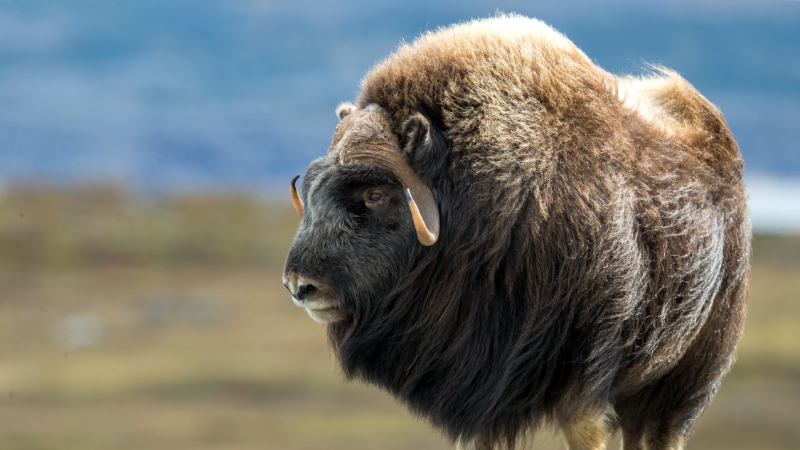
Aliya Jasmine: Bison are the largest land mammals in North America. They can weigh up to a ton and a half, with massive heads, curved horns, and a shaggy front half that makes them look both powerful and prehistoric. Those giant heads function as plows in the winter, allowing them to clear away snow to access the native prairie grasses and leafy plants they love to eat.
Aliya Jasmine: Despite their size, bison are incredibly fast. They can run up to 65 kilometers per hour, which is more than double the speed you can drive in a school zone. For thousands of years, they migrated across the Great Plains, shaping everything they touched through grazing, trampling, and rolling in the dirt.
Ryan Godfrey: So they are an ecosystem architect in a way.
Aliya Jasmine: This is Ryan Godfrey, botanist in residence at WWF-Canada and part of the restoration and regeneration team.
Ryan Godfrey: We talk about a species that is so important to the ecosystem that without them, the whole thing changes. We call that a keystone species. And what that means is if you were to build an archway out of blocks, the last piece that you put in that holds everything together is the keystone, the stone at the very top. And if you were to pull that stone away, the whole arch falls down. And the bison is the equivalent of that in the grassland ecosystem.
Aliya Jasmine: As a keystone species, almost everything the bison did protected and contributed to the environment around them.
Tasha Hubbard: You can start with their hooves and, you know, walking across the land as they graze, their hooves aerate the soil the way the hooves are shaped.
Aliya Jasmine: This is Dr. Tasha Hubbard, an award-winning filmmaker and buffalo activist. Her documentary, Singing Back the Buffalo, follows Indigenous activists, leaders, and communities across the plains as they work to bring the buffalo home.
Tasha Hubbard: And, you know, when you think about a big herd going by in the summer migrations, you know, they would leave behind this trail of land that then when it would rain, the water would penetrate deeper into the soil. Well, that helps the deep roots of the grasslands ecosystem. You look at the way their coat is so woolly, it picks up seeds. And I just love that they're the, like, gardener of the prairies, right? Because they, they pick up these seeds, they move, and then they shed, and then these little seeds travel and go to a new home because of the buffalo.
Aliya Jasmine: Bison helped sustain every part of Indigenous life on the prairies. They provided food, their hides became shelter and clothing, their bones became tools. They were honoured in ceremony, and their matriarchal herd structure offered lessons in governance and community.
Tasha Hubbard: As Indigenous people in our long ago times made agreements with buffalo, 'cause we lived and made agreements with the number of beings that we shared the land with. And so we lived in this symbiotic relationship of both benefits and obligations. And, you know, you see that continued in, you know, treaty discourse of rights and responsibilities. And the same is that with the buffalo. We had our cycles. We had our cycles of movement that were seasonal, that were based on knowledge, deep knowledge of the land and what we needed from it and what we needed to do for it, that was connected to the buffalo.
Aliya Jasmine: Today, the scientific community calls them bison. But when early French settlers came to North America, they called these curious large animals les boeufs, which means oxen in French. Les bouefs eventually became buffalo. And by the time scientists started pushing to change it, it was too late. The name stuck.
Tasha Hubbard: As Indigenous people, you know, that word buffalo, we use that in cultural connection to buffalo. At the same time, fully understanding bison is the scientific conservation word, and it's not necessarily like, oh, we don't like the word bison. It's just that, that buffalo does carry that cultural and historic weight.
Aliya Jasmine: This symbiotic and culturally significant relationship between the buffalo, the land, and the people lasted for centuries. And then, in the late 19th century, devastation. As more and more settlers moved into the prairies, commercial hunting and railway construction dramatically reduced bison numbers. And in the United States, mass hunting of bison was openly encouraged as a way to starve Plains nations of their main food source. To speed up the pace, the American army provided free ammunition to hide hunters, helping to push bison to the brink of extinction.
Tasha Hubbard: It became an effort of domestication and control. Those were the inherent values. That means clearing any being that is a barrier to that goal, and that was quickly identified as being Indigenous people and buffalo.
Aliya Jasmine: In little more than a decade in the 1870s, tens of millions of bison were reduced to a few hundred survivors. In Canada, it was a quieter effort, but equally devastating. Herds disappeared as a result of cross-border hunting, local commercial hide hunters, and government inaction. The Canadian government took advantage of the resulting crisis. They used food rations as tools of coercion to force First Nations into compliance and onto reserves.
Tasha Hubbard: Our elders and grandmother councils and, and others thought, "Oh, how are we going to ensure the survival and thrivance of our future generations?" And so we're like, "Oh, well, we need assistance." However, we never said, "And we'll give everything else. We'll give our own ways up." It was always, "And." You know, we have our ways, and now we'll have this in exchange for sharing the land. And that was the narrative. That's what we were told. That's what we committed to. And the government of Canada said all of this with their left hand. Meanwhile, with their right hand, they were writing the Indian Act.
Aliya Jasmine: The Indian Act, passed in 1876, gave the federal government sweeping control over nearly every aspect of Indigenous life, from land use to governance to culture. The destruction of the bison herds had achieved exactly what it was intended to, and some things it hadn't, like the erosion of the land. Without bison to aerate the soil and keep plant life in check by grazing, the native grasses of the prairies started to disappear, along with the many other species that relied on them.
Ryan Godfrey: The relationships that native plants facilitate goes beyond just grazers like the bison. It also encompasses all of biodiversity.
Aliya Jasmine: Here's WWF-Canada botanist Ryan Godfrey again.
Ryan Godfrey: In particular, insects and plants are very closely related to each other. Their life cycles are deeply, deeply intertwined. Every butterfly species has a specific host plant that they want to lay their eggs on because it's the only food source that their babies, the caterpillars, can eat to grow up on. The caterpillars, in turn, are then feeding birds. So everything is interconnected with each other here. It comes down to the bison, but it also comes down to the plants. There's no start and no end of it. It just keeps going around and around and around.
Aliya Jasmine: Until it doesn't. Over the next few decades, colonial settlement expanded. The native plants that had survived alongside the bison were plowed under, replaced by farmland. These actions came at a cost, including the acceleration of climate change.
Ryan Godfrey: Plants are extremely important players in the carbon cycle because they're the only organisms that can take carbon from the atmosphere in the form of a gas and transform it into a solid and into the building materials that they use to make their tissues, to make their leaves and their roots. And as we've destroyed plant habitat, we have tipped that balance more from solid to gas. That's why we're seeing more carbon in the atmosphere. But if we plant more plants and we let them grow and we let them do their thing, they can tip the balance backwards, back towards more solid matter.
Aliya Jasmine: You can even watch these changes in real time.
Ryan Godfrey: I've seen it in my own garden, actually. I've seen plants turn a soil that felt gray and crumbly and kind of just like rocks. Over time, plants will transform that into a brown and then eventually a black, spongy material that smells alive, and that is the carbon cycle tipping back towards the solid form.
Aliya Jasmine: And some of the most important plants in this carbon cycle are native prairie grasses.
Ryan Godfrey: What makes native prairie grasses different, a lot of them are huge. They're really, really big. They are really tall, like taller than me, and the scale goes up, but it also goes down, and that's a really important part about what makes native prairie grasses special, is their roots can go down. We actually don't even know how deep they go because every time we dig, they just keep going further and further and further. And as those roots die and regenerate, they're leaving carbon and other minerals in the soils, making it its own ecosystem that lives beneath our feet and is doing a lot of really, really important stuff.
Aliya Jasmine: For thousands of years, prairie grasses have been quietly storing carbon beneath the surface of the earth. But with the pressure of increased farming, they were disappearing. And with the bison gone, along with the soil aeration they provided, even the native grasses that hadn't been plowed under were finding it harder to thrive. But from the millions who once roamed, a few hundred bison had survived, and bison are nothing if not resilient. Hidden in remote corners of the continent, protected by geography, by luck, and in some cases, by people who understood what would be lost if the last of them disappeared. Here's Tasha again.
Tasha Hubbard: Some buffalo went far into Yellowstone National Park. I've heard 19, I've heard 22, but you know, a small amount went up in, into the park and escaped poachers. The Dakota and Lakota started small herds, and the Salish Kootenai, one of their people had a dream to go over to Blackfoot territory and bring buffalo back to their territory over the mountains. And they didn't do that right away, but then when they saw how quickly they were dying, they decided to honour that dream, and the man's son went and did just that, brought calves over. And the herd changed hands a few times, but ultimately were on the Salish Kootenai reservation and thrived until the US land policies forced allotment and forced private property. And, uh, at that point, the herd had to be sold and was actually sold to the Canadian government, and that's how we have Elk Island National Park.
Aliya Jasmine: Elk Island National Park, about 35 kilometers east of Edmonton, has played a critical role in bringing bison back from the brink. Offspring from its original herd have acted as a source population that communities across North America can draw from. To date, more than 300 bison have been relocated from Elk Island back to their traditional territories. This work has been strengthened and supported by the Buffalo Treaty.
Tasha Hubbard: So the Buffalo Treaty, it started with a research project with Paulette Fox, who's a Blackfoot scholar and buffalo advocate. There were these buffalo dialogues that were organized throughout the Blackfoot Confederacy. You know, the elders saying, "It's time for us to help bring our buffalo relatives back, and, you know, we're ready for it, but we also can't do it alone, and we need our brothers and sisters from other nations to also be a part of this effort."
Aliya Jasmine: Today, more than 40 nations across Canada and the United States have signed the Buffalo Treaty. As herds grow, nations agree to gift bison to one another, mixing bloodlines, strengthening populations, weaving a continental web. The momentum is real. Nations continue to sign on, united in their shared commitment to restore bison to the land and renew cultural, spiritual, and ecological relationships.
Tasha Hubbard: It really shows the excitement that people have, and I think that excitement continues to grow, not just, you know, among Indigenous people, but I think just in the greater population of people that are realizing, you know, the importance that buffalo have and wanna support that. There's no one nation that can do it alone, and we need everybody, and we need everybody's support.
Aliya Jasmine: Another ally has been the Assiniboine Park Conservancy, a not-for-profit organization responsible for the operation of the Assiniboine Park Zoo in Winnipeg.
Stephen Peterson: I think one of the things that people don't realize about many modern zoos is that often behind the scenes there's a, a lot of conservation work that's going on.
Aliya Jasmine: This is Stephen Peterson. He's the director of conservation and research at Assiniboine Park Conservancy.
Stephen Peterson: It supports, along with donors and grants, a whole team of conservation scientists here that are all really passionate about trying to make sure that species are still on the landscape into the future. And, you know, I think it's a big change in zoos over the last 50 years.
Aliya Jasmine: Assiniboine Park Conservancy is also working to help with bison rematriation efforts. That's right, rematriation. Stephen and his colleagues use this term instead of the more common repatriation, because bison are a matriarchal society. Their herds are led by an experienced elder female, whose knowledge of the land guides the group's movements, foraging, and safety.
Stephen Peterson: I think rematriation is great because those females in the herds are really the ones that are keeping it all together and making sure that herd is strong.
Aliya Jasmine: The conservancy is part of a larger network of organizations working to help bison and other species at risk.
Stephen Peterson: We have these SAFE programs that are saving animals from extinction, and their intent is to bring a whole bunch of zoos and partners together, really laser-focused on a certain species or group. And so I was part of the group that helped establish a North American bison SAFE program.
Aliya Jasmine: One of the conservancy's most direct and memorable contributions to these efforts goes back to 2006. Stephen wasn't there when it happened, but the story of Blizzard is legendary.
Stephen Peterson: There was a white bison that was born, you know, on a ranch in the States. Word of that bison made it to the director at the time, who had, like, a real great love of bison. And so he worked to bring Blizzard to Assiniboine Park Zoo, but he was almost immediately contacted by an elder of a local community that w- told him about the additional cultural significance around white bison.
Aliya Jasmine: Among many Indigenous peoples of the plains, the white buffalo is sacred, a symbol of renewal and balance. The birth of a new white buffalo calf is seen as a sign that it is time to live in harmony with the land again. So while Blizzard was still in quarantine at the zoo hospital, special permission was granted to several elders from nearby Indigenous communities to perform a welcoming ceremony. White bison are rare in the wild, and while some are albino with white coats and pink eyes, Blizzard was not. He had a dark nose and dark eyes. He owed his special white coat to a recessive gene. By 2010, Blizzard had two white calves, and Assiniboine Park knew what they should do next.
Stephen Peterson: So we were able to gift a culturally significant bison to its home. Everyone here is quite, you know, proud that we were able to be a part of that in a small way and to hear that, you know, Blizzard's young and his genetics have also, you know, created more white bison for the community is pretty, yeah, it's pretty great.
Aliya Jasmine: Sadly, Blizzard passed away in July of 2026, but his genetics are still going strong. His calf went to Sioux Valley Dakota Nation. The herd they manage now includes 21 white bison. Currently, most of the bison that have been returned to the prairies through the Buffalo Treaty or other rematriation efforts are managed behind fences. Part of the reason comes down to history. When Canada was setting up reserves, government policy actually favored keeping Indigenous communities small and separated rather than letting them stay together on big stretches of land. A large unified group was seen as harder to control.
Tasha Hubbard: So we don't have the big critical acreage of, you know, land size that a lot of the nations on the southern side of the border have. So what does that mean for, you know, we bring buffalo back to our nations and it's incredibly significant and important for our well-being for them to have the, you know, we give as much of the land as we can to them.
Aliya Jasmine: For now, managing bison behind fences can have some advantages. It gives them protection and opportunity to grow into the numbers they need to weather difficult times in the wild.
Stephen Peterson: So having communities establish these rematriation herds could really be an incredible positive thing for the conservation of bison, as well as building communities at the same time. On big pieces of land, they were subject to predation and they were subject to disease and all these other natural forces. But then if you look at managed herds, they're not subjected to the same pressures. They often, you know, there's predator control or there's no predators that would even impact them anymore. There, you know, there's strict regulations on disease, so they're not exposed to disease in the same way.
Aliya Jasmine: But experts like Tasha know those fences also limit the ecological role bison can play. Without room to move, they can't fully perform their role as architects of the prairie. So while herds continue to grow stronger behind fences, freedom is still the ultimate goal. And work is already underway.
Tasha Hubbard: And so, you know, there's a group of us that are working to figure out, like, where are there those remaining intact prairie lands that, you know, we can have a larger buffalo herd so that they can have a larger positive impact on biodiversity, on grasslands health and, you know, larger opportunities for relationships.
Aliya Jasmine: And there have already been some successes. In 2017, 16 plains bison were transferred from Elk Island to Banff National Park. That herd has now grown to over 130 animals freely roaming a backcountry area of the park. And in December 2023, 25 plains bisons returned to Métis Nation Saskatchewan land for the first time in generations. You can't remove the risk for these newer wild herds. That's part of being wild. But there are things that can be done to give them the best possible chance at survival. Here's Ryan Godfrey, the WWF-Canada botanist, again.
Ryan Godfrey: Bison need native grasses. Bison will live on the non-native grasses that are part of the agricultural landscapes that you now find across the prairies. They will eat those grasses. They will survive, but they grow slower, they may reproduce slower, and they may be a little bit less healthy eating those grasses. And we know that when you provide them with the grasses that are part of their ancestral heritage, they prefer those species and they grow better. They are healthier on that type of landscape.
Aliya Jasmine: But even if putting native grasses back on the prairies is better for the bison and better for the environment, it's not always as easy as planting and then watching the grass grow.
Ryan Godfrey: In talking to various groups that are doing the ecological restoration work, we have found that even when they have the land, they have the resources, they don't have the seeds, so not enough to do the work. So the WWF-Canada Seed Orchards Program came into existence to address that supply bottleneck.
Aliya Jasmine: The Seed Orchard Program is part of WWF-Canada's wider Regenerate Canada program, which supports restoration efforts across the country.
Ryan Godfrey: So climate change that we're seeing, habitat loss, species loss, extinctions, are not going to reverse unless we restore. So we also need to grow more habitat than exists currently. So I think really the dream and the vision of Regenerate Canada is that the next generation will see more nature closer to them than we do, actually, which is a beautiful thing, and it's a pleasure and an honour to be part of that mission.
Aliya Jasmine: The Seed Orchard Program partners with organizations to increase the amount of seed that's available for restoration. There are a few different ways to do that.
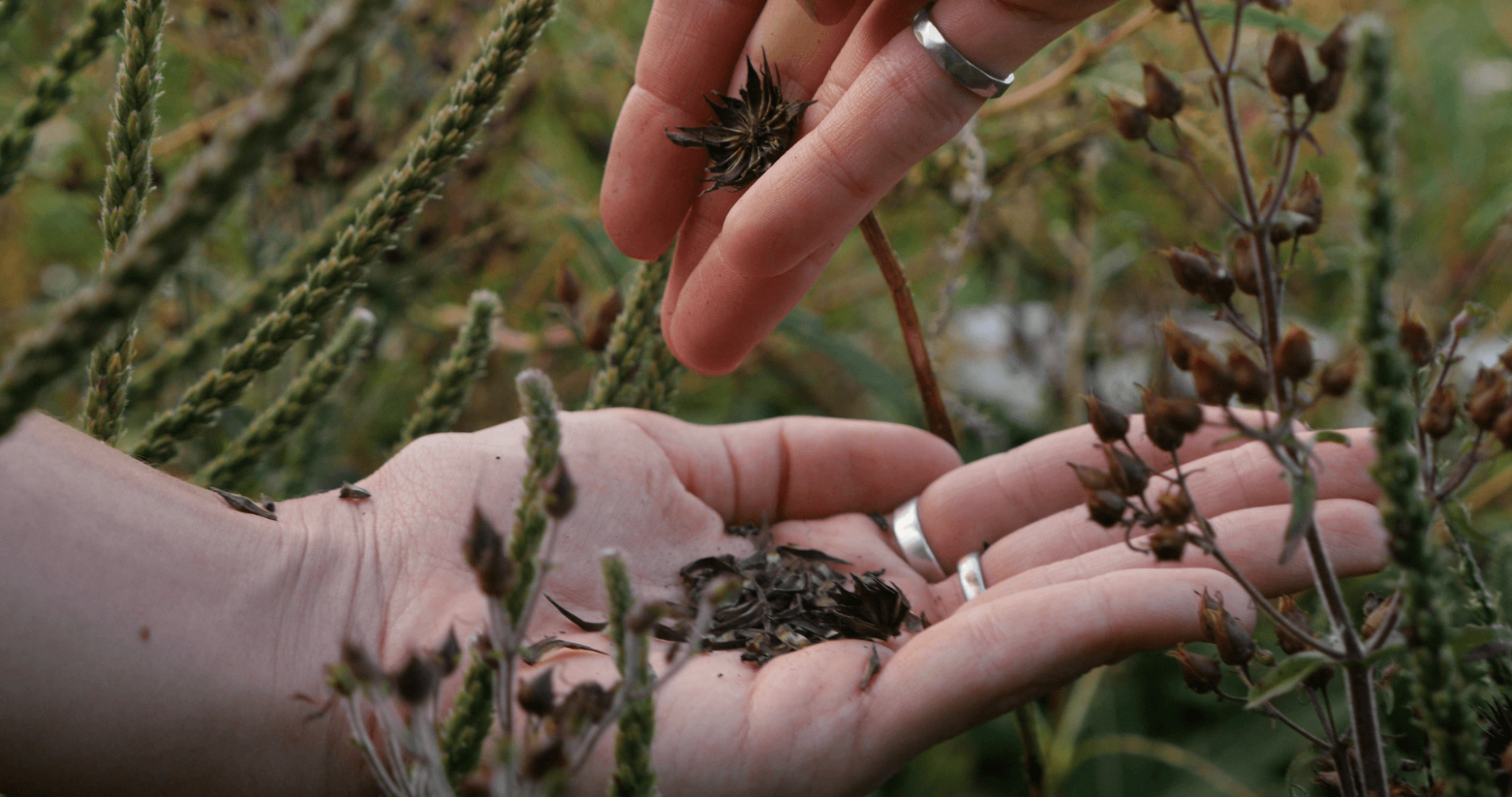
Ryan Godfrey: One seed collection is required. First they have to find the plants, then they have to track when is the right time to harvest the seeds. And if you don't get there at the right time, you know, you're a week late, maybe they all blew away in the wind. And if you're there a week early, maybe they're not ready yet and you can't get them off the plants.
Aliya Jasmine: But collecting seed directly from the wild would deplete the very remnants they're trying to protect. So WWF-Canada went with a different approach.
Ryan Godfrey: So what we can do is grow the plants essentially in a garden. Sometimes it looks more like a meadow or a prairie, but the purpose of that place always is to harvest the seeds and distribute them. So it's an amplification plot, you could call it, an amplification garden, and there are lots and lots of different ways to do that, and many different partners are already doing it, and the Seed Orchards program helps them do it even more.
Aliya Jasmine: The Buffalo Treaty, the Bison Safe Program, the Seed Orchard Program. People from remarkably different walks of life, all arriving at the same understanding, that everything is connected, and that to heal one part of the system, you have to tend to all of it.
Tasha Hubbard: You know, it's a beautiful relationship that is repairing itself. Young people now get to see them out on the land, you know? Still behind a fence, but much more free and much more able to be their true selves, and so that we can be our true selves and grow up in that relationship, you know. And I do what I can to support that.
Aliya Jasmine: Tasha recently visited the bison herd at Grasslands National Park in Saskatchewan. She brought her three-year-old son.
Tasha Hubbard: We were visiting sacred sites, we were seeing the park, and our last stop of the day was to visit the herd. And my son had been in the cab of the truck for the day, and he's three and he was a runner. So we get out of the truck, and he looks over at the buffalo and kind of goes, "Oh, that's," you know, "cool." But then his little body needed to move, and he's running laps around our group. And the buffalo see him, and they start coming towards us, which is a very special experience if a buffalo herd comes towards you, right? Like, y- I always feel lucky when they don't run. And then the, the herd in unison was... You could see they're f- f- following his movements, like their eyes and their heads were following him as he ran around our small group. They were so amazed by my son and, you know, so curious about him. And so we decided to sing a song for them. And our songs have four starts, you know, we s- we sing the same piece four times. And so we sang the first start, second start, third start, and as soon as we, the elders who had the drum, as soon as they hit the drum to start that fourth start, the herd in unison turned and ran over the hills. And we were able to watch them for a long time because of the way the park is. It was so... It was, like, such a powerful moment.
Aliya Jasmine: The prairie is not fully healed. Grasslands across Canada remain under pressure, but something measurable is happening. More than 40 hectares of native grassland at Sioux Valley has been restored. More are in progress, and the bison are back, working to pull everything back together like they used to, taking their rightful place as the keystone.
Ryan Godfrey: They were removed, and the grasslands changed forever when that happened. But we think as an ecological hypothesis that putting bison back on the landscape will build that archway back up and hold it together again the way that it once was.
Aliya Jasmine: Back on Sioux Valley Dakota land, a white bison grazes on native grasses, then rolls into the dirt to scratch an itch, pressing her weight into the ground and leaving behind a shallow depression. It begins to rain, and slowly, the bison's wallow collects water. Soon, a number of Great Plains toads are swimming in that shallow, safe depression, looking for mates. And here, their offspring will have a real chance at survival.
Tasha Hubbard: The buffalo is a very complex story, and it's also a very powerful story. But ultimately, what it is, is, is what this land is meant to be. You know, this land is meant to and evolved to, you know, be the home of buffalo and all the myriad of species that live interconnected with it, including ourselves.
Aliya Jasmine: Thanks for joining us today on This Is Wild. I'm your host, Aliya Jasmine. To learn more about WWF-Canada's Seed Orchard program, head to wwf.ca/thisiswild. And to learn more about everything going on at WWF-Canada, you can sign up for our newsletter, Living Planet News. The link is in the show notes. If you enjoyed this episode, please leave us a review on your favorite podcast app and share the show with your friends. And if you have any questions or suggestions, you can reach us at thisiswild@wwfcanada.org. This Is Wild is created by WWF-Canada and Antica Productions. Our executive producers are Laura Regehr and Stuart Coxe. Our producer is Emily Morantz. This episode was written by Joanne O'Sullivan. Our production team at WWF-Canada is Joshua Ostroff, Erin Saunders, and Tina Knezevic. Nicole MacAdam is WWF-Canada's SVP of Strategic Communications. Mixing and sound design by Philip Wilson.

Aliya Jasmine “AJ” is an award-winning filmmaker, environmental journalist and public climate storyteller whose work sits at the intersection of climate solutions, wildlife and belonging. Her stories have appeared on CBC, NBC News, MTV News, Discovery Channel, and Smithsonian Channel, and she has built a large trusted online community through years of broadcast journalism, digital-first reporting and environmental storytelling. AJ is Founder and CEO of Earth Tones, a purpose-driven media company amplifying underrepresented voices in environmental storytelling. AJ directed, wrote and produced Bird Names, a CBC Short Docs documentary with an impact campaign spanning private, public, academic and conservation-facing screenings. She is also directing Lion Bridge, an independent feature documentary about Los Angeles’ urban mountain lions and the Annenberg Wildlife Crossing, and developing Hot Flashes, Cold Oceans for CBC’s flagship science/nature series The Nature of Things.