Or listen on:





In this episode of This Is Wild, journey into Canada's vast peatlands to uncover the importance of these ecosystems and the work of those who steward and protect them.
Explore why these oft-overlooked wetlands matter, what happens to the carbon that they’ve been sequestering over millennia if they're disturbed and how Indigenous communities, researchers and conservationists are working together to map and protect them from the increasing pressures of mining and climate change.
“There's so much life [in peatlands]. There's a lot of birds, there's animals, there's fish. It's not like walking on concrete, where it'll hurt your feet after a while. When you're walking in the muskeg, which is a Cree word for "swamp," it just feels like it's alive. So, I think about breathing lands: it's a place of life." —Jocelyn Cheechoo, senior specialist, Hudson and James Bay Lowlands
Aliya Jasmine: It's a beautiful spring day. The air is filled with excitement. The sun is shining, birds are chirping, bees are buzzing, and-
Announcer: Clean up on aisle three.
Aliya Jasmine: Okay, so it's not exactly the great outdoors, but a trip to the garden center in those first few days of spring is a sight to behold. Rows and rows exploding with seedlings, a wall full of hundreds of varieties of seed packets, and everything else an aspiring gardener could ever need, including that key ingredient for potting soil: peat moss. For many Canadians, our interaction with peat moss begins and ends at the garden center, where it's primarily used in potting soil and growing mixes. Beyond the garden center, a much bigger story is unfolding. That peat moss in your flower pot, it comes from peatlands, and peatlands are the most effective carbon sink on the planet. In northern Canada, peatlands contain up to five times as much carbon as the same area of the Amazon rainforest. But just like the rainforest, these peatlands and their carbon stocks are increasingly at risk.
Aliya Jasmine: I'm Aliya Jasmine. I'm a wildlife filmmaker and environmental journalist. On this podcast, we are meeting the incredible species that call Canada home and the people working to protect them. From WWF- Canada, you're listening to This Is Wild.
Aliya Jasmine: You've heard of the more popular aquatic ecosystems like streams, rivers, and lakes, but one of the most important ecosystems in the world usually gets a bad rap: wetlands. Wetlands are areas where the ground has been saturated with water for so long that the soil, vegetation, and wildlife have all adapted to a soggy environment.
Cathal Doherty: Wetlands typically form in, like, these low-lying pockets in the landscape, kind of like these little bowl-shaped features. When the water flows into this ecosystem, it carries with it little bits of rocks, and little bits of sediment, and little bits of plant material. But over, you know, tens, hundreds, thousands of years, you're gonna start filling in this little low-lying basin to the point where plants are gonna start to be able to grow along the edges of this.
Aliya Jasmine: That's Cathal Doherty. He's a soil scientist and a specialist in carbon and ecosystems for WWF- Canada. Wetlands are a crucial part of his work.
Cathal Doherty: Wetlands often transition into peatlands when it supports enough plant growth that the plants become the primary driver that starts building the soil. When these sediments become 35% plant material and are 40 centimeters thick, then you officially have a peatland.
Aliya Jasmine: Peat is formed by a plant growing, dying, and only partially decomposing, thanks to the lack of oxygen in the waterlogged conditions of wetlands. As plants grow, they absorb carbon dioxide from the air, which they use to build new leaves, stems, and roots. As more plants grow and die over time, all of the partially decomposed material they leave behind builds up, stacking layer upon layer and effectively locking tons of carbon underground.
Cathal Doherty: In these conditions, oxygen is very limited, so the microbial processes that would typically decompose the plants are very, very slow, and it gives an opportunity for these plants to accumulate. So plants will continue to accumulate on top of each other, forming these little layers, and that's how the peatland grows. You'll have an entire layered chronology similar to how trees grow. They grow in these little rings, and you can count the rings. Peatlands also form in these kind of plant material deposits, and year after year they'll continue to build on top of each other and actually raise the level of the landscape.
Aliya Jasmine: Believe it or not, it's estimated that peatlands cover about 3% of Earth's terrestrial surface, and yet peatlands store one-third of the world's soil carbon, more than all the forests on the planet combined.
Cathal Doherty: Often forests are looked to as carbon sequesters because trees grow really fast. If you want to absorb carbon from the atmosphere very quickly, trees do it extraordinarily well. However, as quickly as forests can grow, they can also lose carbon. And this is because in a forest, the microbes in the soil have a lot of oxygen, it has a lot of nutrients, it has all the tools it needs to break down this plant material, and a byproduct of this decomposition is it's releasing that CO2 back into the atmosphere.
Aliya Jasmine: Peatlands, on the other hand, are dominated by slow-growing plants like moss and small shrubs. But even the slowest-growing plants still grow much faster than they can decompose in this wet environment.
Cathal Doherty: If you're gonna measure it on a day-to-day basis, you'd be like, "Oh my God, this tree is sequestering so much more carbon." But if you scale out to 100 to 1,000 years, this peatland's just slowly accumulating carbon and it's doing at a much slower rate, but it's keeping that carbon stored. So a carbon that, that was stored 1,000 years ago was still there, whereas the tree is long gone, the carbon's back into the atmosphere.
Aliya Jasmine: Peatlands can be found all over the planet, although the majority of them, about 70%, are located in the boreal and subarctic parts of the Northern Hemisphere. Historically, peatlands were considered wastelands by Europeans, who believed that they transmitted diseases, and that draining them was a triumph of human ingenuity over nature.
Cathal Doherty: So in Lord of the Rings, you have the dark marshes, you have the great dismal swamp in American history. They're often given mythological words like sinister and evil if you look at old mythology and old tales. Like even Shrek lived in a swamp. It's where the ogres live. And this was used as an excuse to justify the drainage and conversion of these ecosystems into something that would be viewed as more productive, especially in these utilitarian mindsets in this, in the age of, of industrialization.
Aliya Jasmine: Draining peatlands was especially trendy in 19th-century Europe as a means of what they would call reclaiming the land for things like agriculture and economic development. When European settlers made their way to the Americas, they brought this philosophy with them and waged war against peatlands. Today, around 15% of the world's peatlands have been damaged as a result of these practices.
Cathal Doherty: There was a great study out of the University of Toronto, and they found that roughly 70% of wetlands and peatlands in southern Ontario were converted via tilling practices. They estimated that in the year 1850, these wetlands and peatland ecosystems held about 3.3 billion tons of carbon, and that by the year 2019, 2 billion tons of that carbon was released to the atmosphere. So just through land conversion, just through draining these peatlands and using them for agricultural purposes, that's 2 billion tons of carbon just in southern Ontario alone. That doesn't include all of Canada, all over the world.
Aliya Jasmine: Peatlands act like giant sponges, filtering water, protecting shorelines, mitigating forest fires, and reducing the force of floods. They also support a ton of biodiversity, not to mention providing a stopover for billions of birds as they migrate. In the long term, draining peatlands is even more harmful. When oxygen enters the dried peat, it causes all the piled-up organic matter to oxidize, releasing tons of CO2 into the atmosphere for decades, maybe even centuries.
Cathal Doherty: When you drain that water, that balance between plant growth and decomposition is reversed, and you end up having this net release of carbon into the atmosphere because you've then flushed the water out and it stopped being a peatland. It's now a net emitter of carbon dioxide.
Aliya Jasmine: When peatlands are drained, we flip one of the planet's biggest carbon sinks into a slow-release carbon leak. Even without direct human intervention, peatlands are already being impacted by climate change and are in turn impacting climate change themselves. Peatlands are often found in the subarctic and boreal regions. Because these areas are warming faster than the global average, changes to vegetation, water flow, and permafrost can affect how much carbon these ecosystems store. Think of it like this. The more the permafrost melts, the more peatlands are warming and drying out, which releases more carbon emissions into the atmosphere. As we know, carbon emissions cause temperatures to rise, which causes even more permafrost to melt, which then causes more peatlands to dry out, and so on and so forth. When left intact, peatlands actually help cool the planet. When they're disturbed, they accelerate climate change. Currently, drained and degraded peatlands contribute to 4% of annual human-caused emissions.
Sam Hunter: The peatlands has been thawing or melting, but it was, uh, very fast, at a very alarming rate. You can actually see the decay.
Aliya Jasmine: That's Sam Hunter. He's a member of the Weenusk First Nation, and the natural resources monitor in Peawanuck, a small Omushkego Cree community in northern Ontario. He's been working with his First Nation and research scientists to monitor and record biodiversity, water quality, weather, and landscape changes to the peatlands for many years now.
Sam Hunter: Here used to be a lot of ice in my grandfather's time. When he was a young man, he would be able to walk on solid ground. That solid ground is not here anymore. It's all swamp. I saw the tail end of our traditional life because I was born in the bush, uh, grew up following the seasons, and it seems like everybody had enough to survive. Life was different then. It's totally different now. We don't have the hundreds of thousands of caribous that used to come here. They stopped coming here. A lot of birds that used to be here are no longer here. It affects us in a personal way.
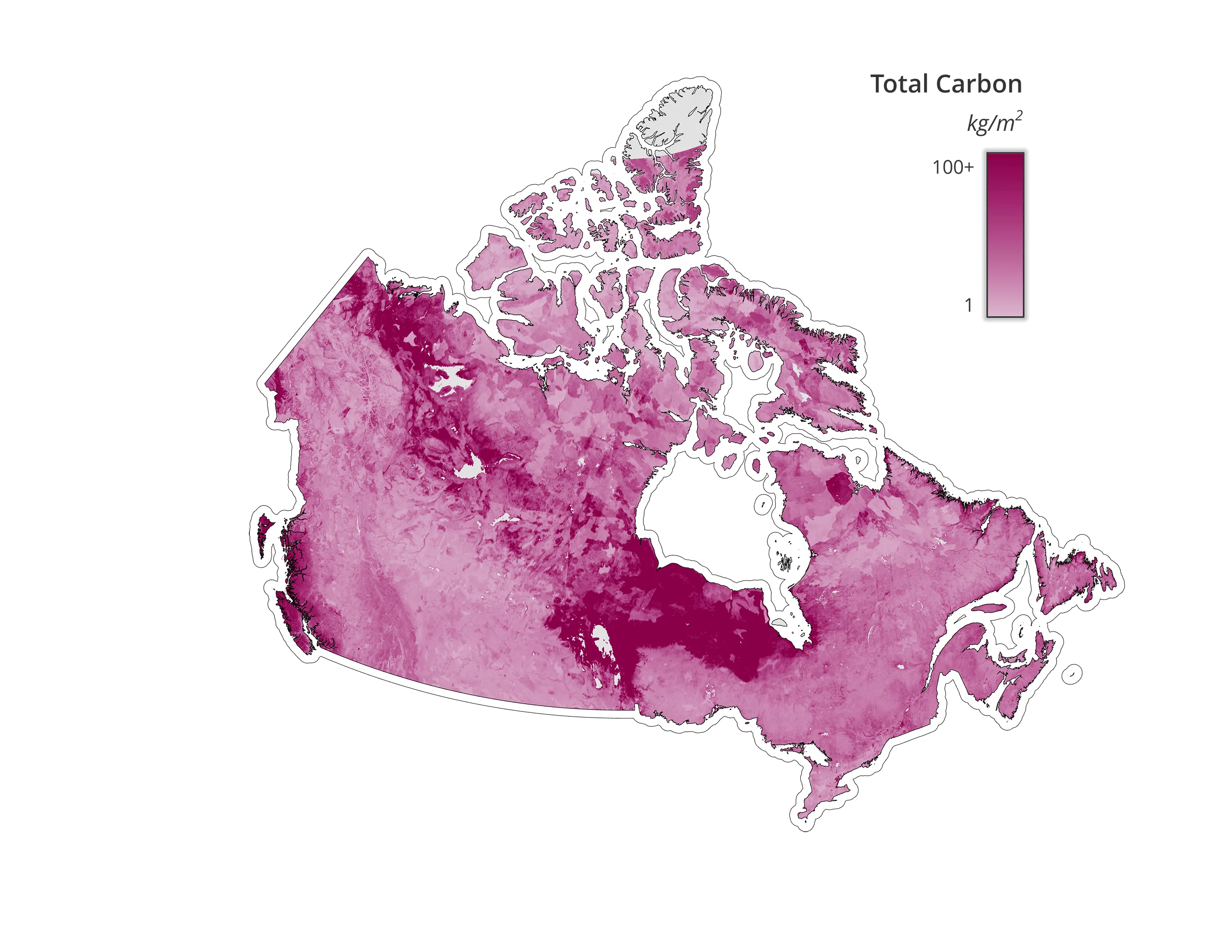
Aliya Jasmine: Canada is the second largest peatland area on earth after Russia. It's home to 119 million hectares of peatlands, and they store an estimated 147 billion tons of carbon.
Cathal Doherty: So 25% of all the peatlands on earth are within Canada. We have peatlands all throughout the Boreal, on the East Coast, in BC up through Northwest Territories, even in the Arctic.
Aliya Jasmine: On top of everything else they do, peatlands also support berry and lichen growth, which feeds migrating caribou, grizzly bears, and other megafauna. The good news is that about 95 to 97% of Canada's peatlands are still intact, but they are in danger. Only 13% or so are currently under legal protection.
Cathal Doherty: Land conversion continues to threaten peatlands, particularly where human population is most dense, and mining companies as well continue to threaten peatlands, particularly in the Hudson James Bay.
Aliya Jasmine: Nowhere is peatland more concentrated or more vulnerable than in the Hudson and James Bay Lowlands in northern Ontario, Manitoba, and Quebec. Omushkego Cree elders call this region the Breathing Lands of Mother Earth.
Jocelyn Cheechoo: When you think of the word breathing, something's alive, right? It's alive. It's breathing. There's life there.
Aliya Jasmine: That's the voice of Jocelyn Cheechoo. She's a member of the Moose Cree First Nation, and she specializes in the Hudson and James Bay Lowlands for WWF-Canada's Resilient Habitats team.
Jocelyn Cheechoo: There's so much life and different kinds of life in those areas. You know, there's a lot of birds, there's animals, there's fish. And the land itself, or the peat, is, it's alive. Like, if you're walking around, it's not like walking on concrete, where you feel like it'll hurt your feet after a while. When you're walking on those, like in the, the muskeg, which is the kinda Cree word for swamp, it just feels like it's alive. So you know, I think about Breathing Lands, it's a place of life.
Aliya Jasmine: Jocelyn Cheechoo and Sam Hunter both grew up in the Lowlands.
Sam Hunter: Some people call it the Breathing Lands. I call it the lungs. It's, uh, basically the same thing. We always call the planet Mother Earth, so she breathes, and one of the big respirators is the peatlands.
Aliya Jasmine: Formed over 7,000 years, the Hudson and James Bay Lowlands is one of the largest continuous peatland systems on Earth. Historically, it has acted as a massive natural climate stabilizer.
Jocelyn Cheechoo: It's huge. Like, that landscape, it just goes on and on and on and on. Sometimes it looks like a desert, like a winter desert.
Sam Hunter: The vegetation comprises of, uh, a lot of peat, hardly any mud. A lot of black spruce, stunted black spruce, tamaracks that are stunted also. And when you get close to the bay, the spruce trees are like a necklace along the bay.
Jocelyn Cheechoo: But there's a lot of life there. You'll see foxes. You'll see partridge. You might see polar bear. You might see moose.
Sam Hunter: Grasslands and willows, a lot of game birds, caribou, black bear, all kinds of foxes.
Aliya Jasmine: As well as being home to a diverse range of species, this is land that's ruled by the cycle of the seasons.
Sam Hunter: So we actually have six seasons which we call winter, Pipon. And then spring, Sîkwan. Mithoskāmin is the blooming season, when it gets warm and plants start budding, and June is Nîpin, summer. And then you have fall, Takwâkin, and after that you have Mikiskaw, which is the freeze up season.
Aliya Jasmine: For the people who live here, the seasons and the animal migrations that go with them actually dictate daily life- and what's for dinner.
Jocelyn Cheechoo: So the spring goose harvest is a really important time in the communities that live in those regions. You have families that go out for anywhere for a week to three weeks to hunt, prepare geese, different ways of cooking them and preserving them. They take, you know, kids, grandparents, aunties, uncles, and they'll be out there harvesting geese for the community, for their families, for food.
Sam Hunter: And then we also hunt male caribou in the summer. And in the fall we'll hunt moose. Fish, we can catch them all year round, but we do try to get enough to last a long time.
Aliya Jasmine: At 33.5 million hectares, the Hudson and James Bay peatlands are roughly the size of Germany, and they store approximately 30 billion tons of carbon. That's equivalent to one quarter of all the carbon stored in the entire Amazon rainforest. But that's not the only thing hiding underneath those dense layers of plant material. Here's Cathal Doherty again.
Cathal Doherty: So the mining claim stakes in the Hudson James Bay Low has increased dramatically in the recent years. And with mines comes roads. With roads comes a change in the hydrological system.
Aliya Jasmine: In the summer of 2025, the governments of Canada and Ontario both passed controversial bills focused on building major industrial projects quickly. These bills could allow these projects to skip past requirements like environmental assessments and Indigenous consultation.
Cathal Doherty: If you're not gonna measure the negative impacts, politicians are going to pretend that it didn't happen. But as a scientist, you kind of know that just because you're not measuring it doesn't mean it's not there. And on the short term, I would just like to see that if these projects continue to occur, that they include scientists in these consultations and local people, and particularly the local Indigenous populations in the Hudson James Bay, will help just to mitigate the effects of the development. But you can't begin to mitigate them if you don't understand them, because then you're just, you're throwing blind darts. And I think that's part of the strategy, is the less we know, the better. As a scientist, I typically take the alternative view, which is the more you know, the better, 'cause you can make more informed decisions.
Aliya Jasmine: One area that's of significant interest to developers is the so-called Ring of Fire, a crescent-shaped mineral deposit that sits right in the middle of the peatlands in the James Bay Lowlands, just 500 kilometers northeast of Thunder Bay, Ontario. There are over 40,000 mining claims in this area already because it's rich in minerals like chromite, copper, and nickel, all of which are critical for things like electric vehicle batteries and solar panels.
Cathal Doherty: If you're going to affect the second-largest peatland complex in the world, and your justification is that we're actually gonna be saving the environment because these minerals are gonna contribute to electric vehicles, then you've kind of, you've thrown out the baby with the bathwater.
Aliya Jasmine: The peatlands in Northern Ontario are home not only to a wide variety of plants and animals, they're also the ancestral homelands of several First Nation communities, including Sam and Jocelyn's.
Sam Hunter: The peatlands to us are very important because we always used it for everything. Back in the old days, we used it for, uh, baby diapers or toilet paper. We also used it for heat. We used it to, uh, insulate our homes. Very good insulator.
Jocelyn Cheechoo: Those waterways and rivers were, and still are, major travel ways for families to get out onto the land to go hunting, harvesting, to go camping and fishing and so on. So they're still used. People still travel on those rivers.
Aliya Jasmine: As far back as 2021, Indigenous communities in the James Bay and Hudson Bay Lowlands have been speaking out against the development. The Mushkegowuk Council, which is a political organization made up of seven Cree communities in the region, even called for a suspension on development in the Ring of Fire until more comprehensive scientific studies were completed. That same year, the council teamed up with WWF-Canada and McMaster University to measure and map peat carbon, producing some of the most detailed peat carbon maps ever made. Here's Cathal again.
Cathal Doherty: There's an awesome satellite called GEDI, and it like shoots lasers at Earth, and it can measure how those lasers reflect back to Earth. So what these researchers did is they collected all this satellite data. They also collected all the peat core data on the ground, and they built a model.
Aliya Jasmine: One of the models they built predicts where peat is located across the country with a high level of accuracy. More importantly, they can tell us how deep that peat is likely to be. Because the deeper the peat, the more carbon is stored in it.
Cathal Doherty: And you can start asking different questions. For example, if you were to build a road here and affect the hydrology of this area, how much carbon are you putting at risk? The Hudson and James Bay stores about 30 billion tons of carbon, and to put that into context, that's roughly the amount of greenhouse gas emissions that Canada would produce over 175 years.
Aliya Jasmine: In reaction to Bills 5 and C-5, the Mushkegowuk Council declared the Ring of Fire a protected homeland, saying that no development can proceed without the free, prior, and informed consent of the affected First Nations, arguing that these bills violate their basic human rights.
Jocelyn Cheechoo: There's nothing about consent or consultation with this new bill. Where does that leave Indigenous communities? A lot of communities have a lot of real infrastructure issues. There's issues around housing, health, education, water treatment, sewage. Communities are often dealing with crisis when it comes to their infrastructure. You don't have safe drinking water. You have moldy homes, overcrowded homes. How are communities supposed to participate in this system if they don't have the means to, right? It's not a level playing field.
Aliya Jasmine: The council says that it's the people who live in the area who need to have the most say when it comes to what should or shouldn't be built here.
Jocelyn Cheechoo: Ultimately, like it should be the communities who are leading this. And if they want to have, let's say, an energy project that's close by their community, that's a part of their territory, then they should have the financial ability, the capacity, the staff, you know, the community support behind that.
Sam Hunter: The area will change. The people that come up here will change and alter the landscape, which we call home, not only for our home, but also for the animals that live up here. The mining hasn't even started yet, and people are starting to encroach into our traditional hunting territories, and I think that's from the choppers and planes that go back and forth to the Ring of Fire. They're scaring away all their big game, and they're starting to hunt in our territory, which is not right from our perspective.
Jocelyn Cheechoo: Just because you have a project happening in your backyard, that doesn't mean that you're gonna get a new house. It doesn't mean you're gonna get a new school.
Aliya Jasmine: The council, along with fifteen other First Nations, have expressed concerns that this development is happening faster than environmental safeguards allow and will affect not just the communities immediately around where the mining is happening but everything and everyone downstream of them as well.
Sam Hunter: It's really unfair for us, the Indigenous people. We don't really do anything to harm the environment but we're the most impacted.
Jocelyn Cheechoo: Indigenous communities need to be at the table when these projects are happening in their territories or upstream of them, which is, is the case for a lot of that, the peatlands area. They need to have the capacity and the, the resources to be able to make decisions whether or not that they want a project to move ahead or if they wanna be a part of a project or start one on their own. It's not just all development. It's not all energy or mines or forestry. Like, there are other projects that communities are definitely interested to sustain themselves and their cultural practices and languages.
Aliya Jasmine: One of the many things these remote communities need is roads. Several of them are being planned as we speak, with the goal of connecting both these isolated First Nations and the Ring of Fire to Ontario's highway network. The provincial government started building some of these roads in June 2026. They say these construction projects will create jobs and help build up Ontario's economy. But community perspectives don't always line up. Some First Nations support and even lead on road construction. Others have concerns on how these new roads could impact their lands and waterways, as well as local wildlife and traditional ways of life. Some of these questions have even gone to court. For both Jocelyn and Sam, finding the right approach comes down to listening to those who know the land best.
Sam Hunter: A working group should comprise of land users, economic development officers, people like me that work in the field, hunters and trappers. Those are the people that are supposed to be sitting in an advisory group to determine what the community wants. That's the kind of leadership that we want to be able to determine what we want for the future.
Jocelyn Cheechoo: It's sharing information, it's being transparent, and it's also being accountable. I could see each community having a well-staffed, funded lands and resources environment departments. And as part of those, those departments, they would have, you know, land guardians, stewards, monitors, whatever you want to call them, going out, seeing what's happening out on the land, noting, you know, changes they're seeing, who's out there, who's doing what. And with that information and, you know, that type of team, the communities would be able to make, you know, decisions based on, you know, what their departments know. It's being at the table when it comes to making decisions or talking about possible, uh, projects, being informed and being ready to say, you know, "Well, maybe we could do this. Maybe if we did it this way," or it's just flat out, "No, that's not gonna work, not in this area." So that's how I see stewardship happening.
Aliya Jasmine: Peatlands took thousands of years to build, and yet we have the ability to destroy them in a matter of months. Protecting them is one of the fastest, cheapest, and most powerful climate actions available. The best thing we can do to help the peatlands is to support the Indigenous communities to continue stewarding them as they have since time immemorial.
Jocelyn Cheechoo: It's home for so many people. That's where all their ancestors came from. We didn't come from another land or area. And when I say home, it's home home. It's not like my summer home. It's not it's, it's home. And there's so much history, stories, culture, language in those areas, and if that doesn't resonate with people, then, you know, I don't know what will.
Aliya Jasmine: Thanks for joining us today on This Is Wild. I'm your host, Aliya Jasmine. To learn more about WWF-Canada's work to protect the peatlands, head to wwf.ca/thisiswild. And to learn more about everything going on at WWF-Canada, you can sign up for our newsletter, Living Planet News. The link is in the show notes. If you enjoyed this episode, please leave us a review on your favorite podcast app and share the show with your friends. And if you have any questions or suggestions, you can reach us at thisiswild@wwfcanada.org. This Is Wild is created by WWF-Canada and Antica Productions. Our executive producers are Laura Regehr and Stuart Coxe. Our producer is Emily Morantz. This episode was written by Andrea Varsany. Our production team at WWF-Canada is Joshua Ostroff, Erin Saunders, and Tina Knezevic. Nicole MacAdam is WWF-Canada's SVP of Strategic Communications. Mixing and sound design by Philip Wilson.

Aliya Jasmine “AJ” is an award-winning filmmaker, environmental journalist and public climate storyteller whose work sits at the intersection of climate solutions, wildlife and belonging. Her stories have appeared on CBC, NBC News, MTV News, Discovery Channel, and Smithsonian Channel, and she has built a large trusted online community through years of broadcast journalism, digital-first reporting and environmental storytelling. AJ is Founder and CEO of Earth Tones, a purpose-driven media company amplifying underrepresented voices in environmental storytelling. AJ directed, wrote and produced Bird Names, a CBC Short Docs documentary with an impact campaign spanning private, public, academic and conservation-facing screenings. She is also directing Lion Bridge, an independent feature documentary about Los Angeles’ urban mountain lions and the Annenberg Wildlife Crossing, and developing Hot Flashes, Cold Oceans for CBC’s flagship science/nature series The Nature of Things.