Or listen on:





Magnificent maples are found across the country, but in Quebec they’re put to work supplying sap for syrup. As pressure builds to increase sugar bush yields, the ecology of those forests is changing, threatening what helped make the sap flow so freely in the first place. Yellow-bellied sapsuckers — bright and industrious woodpeckers who make their home in these forests and provide homes for other species — are sending us signals about what needs to change.
With expertise from conservationists, sugar bush owners and bird scientists, find out how sapsuckers are helping connect the dots between biodiversity and forest health so we can safeguard the future of Canada’s yummiest ecosystem.
“I've been in that sugar bush since probably the age of four, and birds have always been there. They're just like companions when you're walking. It would be extremely sad if…the birds would disappear from the forest. I would do everything possible to try to allow them to come back by providing the better…environment for them.”—Louis L’Allier, sugar bush owner and professor of classical studies at the University of Ottawa
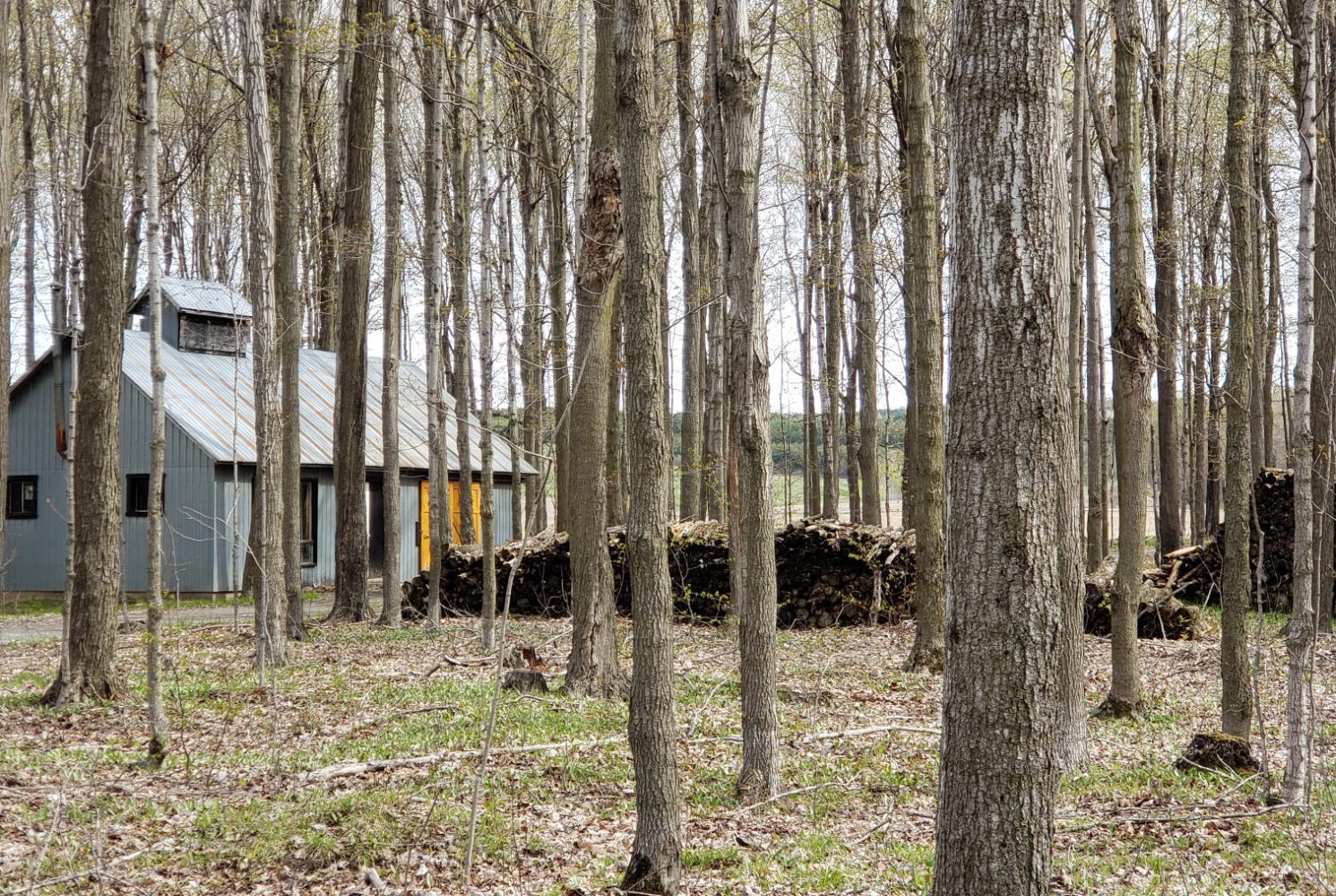
ALIYA JASMINE: It's a warm April morning at a sugarshack in Southern Quebec. Families crowd around long picnic tables, enjoyingsaucer la palette, dipping wooden spoons into boiling sap, and then licking thesweetness clean. Nearby, maple taffy is drizzled onto snow while plates arepiled high with maple syrup-soaked pancakes and farm-fresh eggs fried in boiledsap réduit. Steam drifts from the sap evaporator. The air smells like woodsmoke and spring thaw. It's a scene that many people not only recognize, buthave experienced, particularly if they're from Quebec. Collecting maple sap isa tradition older than the province itself. Well before French settlersarrived, First Nations were harvesting sap each spring, drinking it fresh,using it as medicine, and concentrating its sugars. Eventually, maple sap alsobecame an essential part of life for French settlers. They built simpleshelters in the woods where they gathered to make maple sugar and syrup at theend of every winter. After months of cold and isolation, the sugar season wascause for celebration. By the 20th century, the cabane à sucre, or sugar shack,had become something more than a necessity. It's a ritual, a school trip, afamily outing, a cherished tradition passed through generations. Back at thepicnic tables, a sharp percussive beat cuts through the chatter. Ayellow-bellied sapsucker has landed on a tree and begun to drill. To thefamilies enjoying their maple treats, it's the familiar springtime sound of awoodpecker searching for food. But for forest ecologists, it's a sound thathelps them understand whether a forest is healthy enough to sustain the manyspecies within it, including the maple trees that these families have come tocelebrate. Because unfortunately, some maple forests in Quebec are beginning tofall silent.
ALIYA JASMINE: I'm Aliya Jasmine. I'm a wildlifefilmmaker and environmental journalist. On this podcast, we are meeting theincredible species that call Canada home and the people working to protectthem. From WWF-Canada, you're listening to This Is Wild.
ALIYA JASMINE: While many people have heard of ayellow-bellied sapsucker, very few can describe one.
DOUG TOZER: For people who have never seen one, yellow-belliedsapsuckers, they're striking, they're bold. I mean, they kind of look likeclowns in some ways, 'cause they're this striking combination of black andwhite and red colour.
ALIYA JASMINE: This is Doug Tozer, director ofwaterbirds and wetlands at Birds Canada. His PhD research was dedicated almostentirely to yellow-bellied sapsuckers.
DOUG TOZER: So they're black and white on their bodies like your typicalwoodpecker, but they have a very bold white vertical stripe on the wing, whichonly sapsuckers have. So that's a really good way to know you have a sapsucker.
ALIYA JASMINE: A sapsucker's underbelly can rangefrom white to pale yellow, hence their name. And not only do they lookdifferent, they behave differently, too.
DOUG TOZER: Other woodpeckers, you know, they drill into the middle oftrees to get at insects that are right in the wood, and they leave these bigholes when they're accessing that.But sapsuckers don't do that. They make very shallow,small holes that are called sap wells that fill with sap from the tree's sap,and that's the main thing they eat. They actually lick that sap up with aspecial hairy tongue that works really well for lapping it up. So it's, that'sthe really unique feature about sapsuckers is they suck sap, just like theirname says.
ALIYA JASMINE: While humans flock to these forestsfor the maple tree sap, the sapsucker has different preferences. Their primarytargets are aspen and birch, which are found alongside maples in healthy,naturally biodiverse forests. These trees have a thinner bark, which makes themeasier to drill into neat horizontal rows. It's a pattern that, once you knowit, is unmistakable. Louis L'Allier has been seeing it since he was a child.
LOUIS L’ALLIER: You can see after the passage of thesapsuckers, you can see on the bark, lines of little dots, almost like thepunch cards that you had in the early days of computers. So you can see thelittle bubble of the sap on each hole. You wonder if it's not from them that wetook the the idea of collecting the sap.
ALIYA JASMINE: Louis is a professor of classicalstudies at the University of Ottawa. His family has owned a sugar bush in theArgenteuil region of Quebec since the late 19th century.
LOUIS L’ALLIER: I'm not operating the sugar bushmyself, but we hire someone to do the job. It's a typical sugar bush forQuebec, meaning that it's not a huge operation. We have about 8,000 trees,which is probably in the average for Quebec. It's enough to provide someonewith a reasonable living.
ALIYA JASMINE: A sugar bush is a stand of mapletrees specifically used to collect sap for maple syrup or sugar, and within asugar bush like the one Louis' family owns, the sap wells created by sapsuckersattract a remarkable number of visitors. The ruby-throated hummingbird, forone, has few other food sources in early spring and depends strongly on asapsucker's wells. Here's Doug Tozer from Birds Canada again.
DOUG TOZER: Just about every other species of bird you can see at a welleventually, but there's also hundreds of species of insects that go to thesewells. You see a well with sun on it in the afternoon, it'll have, like,hundreds of individuals of wasps, bees, butterflies, you name it
ALIYA JASMINE: Mammals use the sapsucker wells too.Some of them are surprising.
DOUG TOZER: Flying squirrels go to them. Mice go to them at night. Batshave been recorded licking the sap at them. I've seen martens licking sap onsap wells. Porcupines have been record- Like, there's dozens, dozens, dozens ofother animals that use these things.
ALIYA JASMINE: And it's not only the sap wells thatprovide for other species. The nests that the sapsuckers create by drillinglarge cavities into tree trunks also make great homes.
DOUG TOZER: It's quite fun to watch a sapsucker build its nest, and it'smouthful by mouthful. Once the nest hole is big enough that its head disappearsin there, it'll stick its head in, it wiggles around, and then it leans backand it sort of shakes its head really violently and a puff of fine sawdust sortof goes like a cloud into the air. And then in it goes to get another mouthful.Two or three weeks later, they have finally a full cavity that they candisappear into.
ALIYA JASMINE: While sapsuckers can reuse theirnests for up to seven years, they do leave them unoccupied for a few months ata time when they migrate south for the winter, giving other species a chance tomove in. And it's prime real estate because these homes are built with aremarkable feature. Their entrance is only about four centimeters wide, smallenough that once a flying squirrel or a small owl slips inside, nothing largercan follow. So the sapsucker is not just feeding and living in the sugarbush,it's helping to actively shape it, which is why some ecologists consider it akeystone species of sugarbushes.
DOUG TOZER: If the keystone species disappeared, you would notice somebig negative effects on a bunch of other species. So in terms of sapsuckers,you know, they're probably a keystone species because if all of a sudden all ofthem disappeared tomorrow, we would see all these trickle-down effects, if youwill, on all those other species.
ALIYA JASMINE: Of course, humans are shaping theseforests too, and those impacts were on full display when, during a walk in asugarbush in southern Quebec, a conservation scientist noticed an alarmingabsence of sapsuckers.
STEVE HAMEL: For many years, I did work as a field biologist doing birdsurvey pretty much everywhere in many provinces. And so a few years ago, I cameback to Quebec and I went back to sugarbush forest.
ALIYA JASMINE: This is Steve Hamel, biodiversityand habitat restoration specialist for WWF-Canada. He's been watching forestshis whole career.
STEVE HAMEL: I went in early June just to hear those birds and to seethose bird again, and that was amazing for me because there were not many birdssinging. The yellow-bellied sapsucker was not calling as it used to be, becauseusually at sunset in June in a sugarbush, birds are singing loud, and theyshould be, like, more numerous. So then I start my quest to understand why,what's going on.
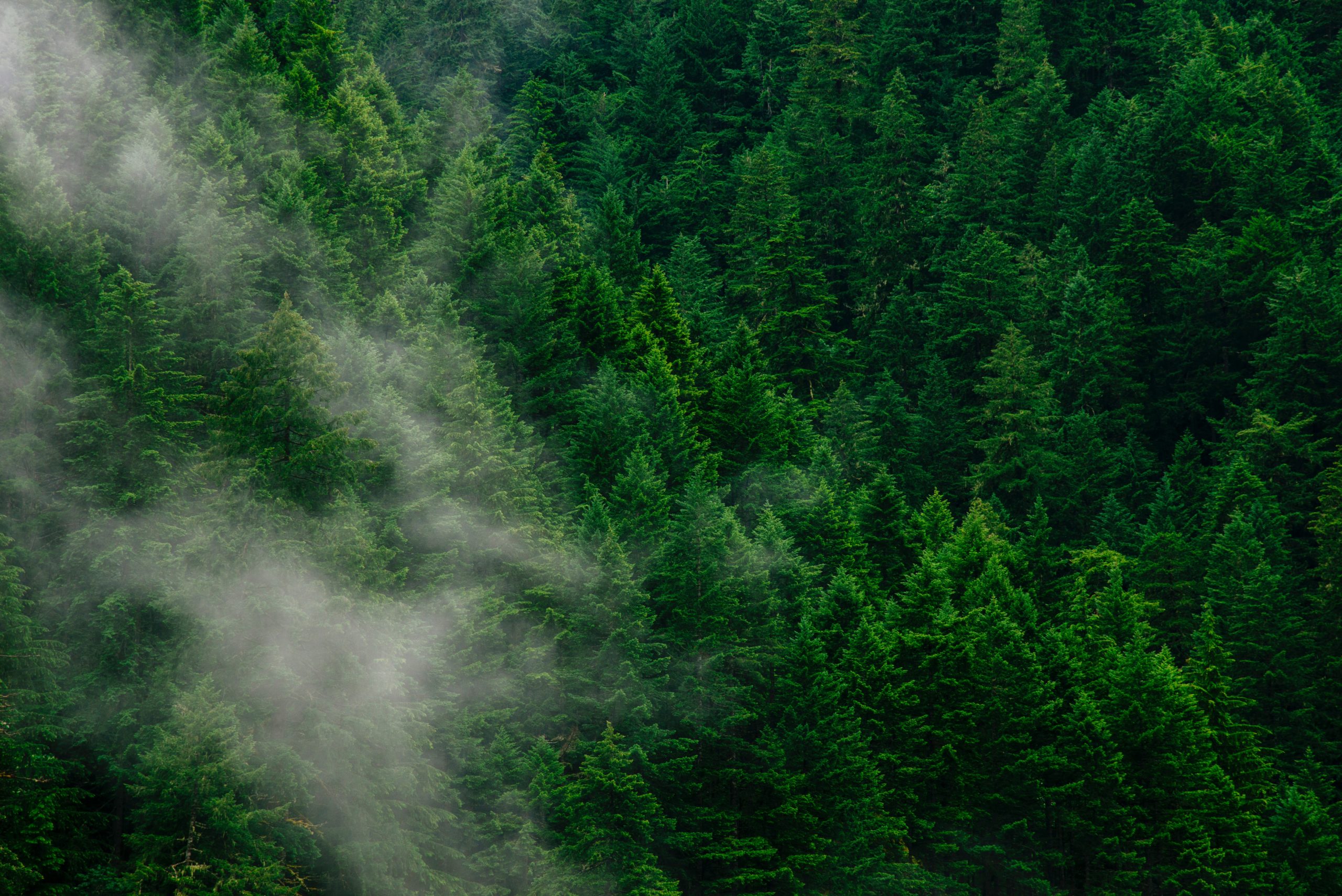
ALIYA JASMINE: The investigation began, and soon itpointed back to the maple industry itself.Southern Quebec's maple forests were never just madeof maple trees. Historically, they developed as a mixed ecosystem that includesmaple, yellow birch, basswood, hickory, aspen, and other species. Like anyhealthy forest, they were naturally structured in layers that included theforest floor, understory vegetation, shrubs, and a canopy of mature trees, allnecessary to keep the maple sap flowing.
STEVE HAMEL: So it's very important to understand that the maple syrup isnot coming from one tree. It's coming actually from a complex ecosystem.Sometime a maple forest actually will produce a lot of sap because the soilcondition are just perfect, and those soil condition are made by other speciesof trees, and even by wildlife. And so that complexity will keep the mapletrees healthy and will produce sap for a very long time.
ALIYA JASMINE: For most of history, maple producerskept the forests as they were: diverse, layered, complex. Why wouldn't they?There was no compelling reason to alter them. Then came the maple boom.Beginning in the 1960s, the industry modernized fast. Hand-collected sapbuckets gave way to networks of plastic tubing. Better filtration madeprocessing more efficient. A province-wide regulatory system stabilized pricesand grew exports. Today, Quebec supplies roughly 70% of the world's maplesyrup.
STEVE HAMEL: It's a big business. In 2025, it's over, just over $1billion. It's huge. We have produced last year 225 millions pounds of syrup, soit means that we need to manage 55.5 million taps. And to manage those taps, weneed 8,400 business to be in charge of all that. So it's huge.
ALIYA JASMINE: To support this growth, many mapleproducers began managing the makeup of their sugarbushes. They removednon-maple species, cleared understory shrubs, and generally simplified theforest to maximize room for maple sap collection and make it faster.
STEVE HAMEL: So many sugarbush owners, you know, when they tap theirtrees in springtime, they have to walk very fast. They don't have time to lose.So what they do, they cut all the vegetation layers that we see in the forest.They want to make sure that the tubing they use, it's not broken by the fallingbranch or falling trees. So they want it clean to work safely and fast. Sothe idea is good because you want to run your business very quickly, but allthose dead branches and those snags and those vegetationlayers are so important for the ecosystem.
ALIYA JASMINE: For Louis, the Quebec sugarbushowner, it's always been important to keep the diversity in the forest hemanages. But as an owner, he also understands the pressure to move fast.
LOUIS L’ALLIER: Every year, you need to reconnectall your tubing to all the trees. If you have 10,000 trees, you need to connect10,000 tubes to your trees. Within a few weeks, you need to produce enough tolive for the rest of the year. If you miss that, well, too bad, you've done allthose efforts for nothing.
ALIYA JASMINE: And that window for maple collectionis forever shifting. The maple sap season is one of the shortest harvests inagriculture, somewhere between February and April. It depends entirely on aprecise weather window, freezing nights and warm days. The moment temperaturesstop dropping below zero at night or the trees begin to bud, the season isover. In a great year, the window might be eight weeks, but in some years it'sonly two, and because of the push to maximize production in the short sapseason, some maple forests have been purposely altered to consistoverwhelmingly of sugar or red maple, a condition sometimes referred to asmonoculture. Not in exactly the same way corn fields are a monoculture, whereyou find row upon row of only corn, but in the sense that the forest has beenchanged into a much more simplified environment, sometimes up to 95% justmaple. And ironically, a sugar bush made into a monoculture could eventuallyproduce less maple syrup. In 2023, an exceptionally warm spring showed exactly howthat works.
STEVE HAMEL: We need water to make sap, so we want a system that willkeep shade, and, I mean, the example I, I can give is that I think in, it's in2023, we had a very hot spring, like too hot, and that was, I think we produced50% less maple syrup that year because of that. But I know a sugar bush wherethey don't manage the forest, it's full of fir, so the fir tree, the coniferoustrees, actually they kept the shade a lot, so the coniferous trees allowed themto produce during three more weeks, so they actually produce a lot more maplesyrup because of that.
ALIYA JASMINE: We now know that simplified forestsare less resilient. They are more vulnerable to climate pressures such asreduced snow cover, erratic freeze-thaw cycles, intense storms, and drought,all of which are becoming more common with climate change. Dry, depleted soilalso weakens the trees themselves. It disrupts the way they absorb water, grow,and produce sap. In short, less moisture means less sap, which means less maplesyrup. If producers stay on this path, the projections for the maple industryin the decades ahead are sobering. If nothing is done, it's estimated that by2040, maple syrup production in Southwest Quebec will no longer be profitable,and production will be forced to move north, and by 2060, in some regions ofthe province, it may not be possible at all.
STEVE HAMEL: You know, trees live many years, so I'm not worried aboutmaple syrup production in the next20 years. You know, those maple will still producemaple syrup. We have to think longer term, so the challenges in 35, 40 yearswill be different, but the new generation of seedlings are growing today, andwe want them in 40 years to be there and to be healthy to produce sap.
ALIYA JASMINE: It's a delicate balance between theneeds of the maple producer racing to meet demand and the needs of the forest,plus all the species that call it home. But finding that balance isn'tstraightforward. Forest decline doesn't announce itself. There's no singlemoment when a healthy sugar bush tips into an unhealthy one. It's a slowerosion. What maple producers need is a warning system, one that alerts themwhen they're out of balance, and perhaps there already is one if they listencarefully enough.
STEVE HAMEL: We certainly can make a connection between the sapsuckerabundance going down and the monoculturization of maple forest. Sapsuckers needa complex ecosystem. They need snags and dead trees, and they need to find their food indead trees. And in monoculture, when the forest has been clean, cleared out of the trees, well, there's less food for thesapsucker. So I'm pretty sure that we can explain why we see or hear lesssapsuckers in maple forest. And I think the yellow-bellied sapsucker would makea great indicator because it's a very abundant bird that live, yes, in mapleforest, but live also in the north in different kind of ecosystem. But usingthat as the indicator of the maple forest ecosystem could be very interesting.
ALIYA JASMINE: And this potential early warningsystem could be just the thing to give sugar bush operators enough time to turnthings around.
STEVE HAMEL: In 2025, we start a project with 22 different sugar bushes,and we want to understand how we can use bird as biodiversity indicators inmaple forest.
ALIYA JASMINE: This is part of WWF-Canada's broaderMaple Initiative, which seeks to restore ecological complexity within workingsugar bushes.
STEVE HAMEL: We want to see if we could have a gradient of naturality inthose forests. Let's say on the left side, we would say a forest that it's verymuch managed, where they clean up the forest very much. There's no dead trees,there's no vegetation layers. And on the other side, we would have like a wild,non-managed maple forest, and we want to see how birds respond to that.
ALIYA JASMINE: The results of this study aren't inyet. Louis L'Allier is one of the owners who is looking forward to learningwhat they reveal about the health of his forest.
LOUIS L’ALLIER: They've installed some recorders thelast year to try to see which bird there were present. With birds, especiallythe small ones, you often don't see them, but you can hear them. And the WWF isinstrumental on recording and analyzing the presence of those birds. It's a wayto figure the health of the place also. Again, a silent forest is not a healthyforest.
ALIYA JASMINE: WWF-Canada is also helping producersaccess provincial grants for forest management and working with industryleaders, forest engineers, and academics to develop practical restorationguidance for maple producers.
STEVE HAMEL: We are having workshop with the industry, so it include theindustry leaders, some sugar bush owners, and some academics from differentuniversities, and we sit all together and we are trying to put on paper whatare the best practices.
ALIYA JASMINE: This summer, aspens, oaks, and whitepines will be planted in select areas as part of these restoration efforts.Aspens in particular, a favorite of the sapsucker, grow quickly and provideshade that help retain soil moisture, in turn supporting maple regeneration andthe wildlife habitat that depends on a layered, complex forest. But noteveryone is on board with these efforts. Some maple producers remain focused onmaximizing sap yields through maple dominance. It is a complicated push andpull between two sides of a maple industry that contributes hundreds ofmillions of dollars annually to Quebec's economy.
STEVE HAMEL: So we have many, many enthusiastic sugar bush owners thatactually, they really understand their ecosystem. They want to do better. Theyunderstand that they did some mistakes maybe in the 1980s, 1990s. Now theyunderstand more the ecosystems, and they want to be part of the solution. Wealso have some owners who they didn't open their door to the project becausethey knew they went too far in the cleaning process, and they just, they didn'twant us to do a study there, there, which is too bad because the data wouldhave been so important. But in majority, people love their forest. They want todo the best for it.
ALIYA JASMINE: But the economic pressure is realand growing. Global demand for maple syrup has never been higher. Louisunderstands the pull towards maximizing production. But as someone who has beenwalking in the same forest since he was a child, he also knows what stands tobe lost.
LOUIS L’ALLIER: To stop hearing the birds would beextremely sad. We're in the beginning of spring right now, and it's a joy forme to hear the birds in the morning. When I leave my house, I can hear them allaround. I've been in that sugar bush since probably the age of four, and birdshave always been there. They're just like companions when you're walking. If bya terrible fatethe birds would disappear from the forest, I would do everything possible totry to allow them to come back by providing the better, more suitableenvironment for them.
ALIYA JASMINE: Steve, for his part, remainspositive.
STEVE HAMEL: I am hopeful for the future of maple forest in Quebec. Ifeel like people are so much attached to that ecosystem. Even new generationare getting attached to that ecosystem, and it's such a Canadian thing toforest the maple syrup production, and we are not going to let that culturethat we have here in Canada go, so I'm very positive for sure.
ALIYA JASMINE: Back at the sugar shack, the familygathers their coats. The spoons and plates are put away. They're happy in theway that only a warm meal and sweet treats at the end of a long winter can makeyou. For a moment, the forest is quiet, and then the drumming starts again. Thefamily looks up. They're looking for the woodpecker. Somewhere up in thosetrees, a yellow-bellied sapsucker is doing what it's always done, drilling itscareful row of wells, building its nest, drawing the whole forest in around it.Hummingbirds, warblers, flying squirrels, dozens of creatures leaning on onesmall bird. And if you go looking for one in early spring, Doug Tozer fromBirds Canada has a tip.
DOUG TOZER: To find a nest hole, when you're walking through a standduring the nest-building time, you would think that you would look up, right,to find a nest. You'd look for the holes. But no, we learned it's better tolook down. When sapsuckers build nests, they take mouthfuls of fine sawdust,and they shake their head, and the sawdust goes into a puff and down to theground. So we found the best way to find nests early in the spring was just gothrough the forest looking down and look for fine sawdust on the leaf layer.And then you look up and find your, your sapsucker nest that way.
ALIYA JASMINE: Look down for the sawdust, then lookup. It's a small thing to know, but that's how it starts, paying attention towhat's there and noticing when it isn't.
ALIYA JASMINE: Thanks for joining us today on ThisIs Wild. I'm your host, Aliya Jasmine. To learn more about WWF-Canada's MapleInitiative and what you can do to help protect Quebec's maple forests, head towwf.ca/thisiswild. If you enjoyed this episode, please leave us a review onyour favorite podcast app and share the show with your friends. And if you haveany questions or suggestions, you can reach us at thisiswild@wwfcanada.org.
This Is Wild is created byWWF-Canada and Antica Productions. Our executive producers are Laura Regehr andStuart Coxe. Our producer is Emily Morantz. This episode was written by JoanneO'Sullivan. Our production team at WWF-Canada is Joshua Ostroff, Erin Saunders,and Tina Knezevic. Nicole MacAdam is WWF-Canada's SVP of StrategicCommunications. Mixing and sound design by Philip Wilson

Aliya Jasmine “AJ” is an award-winning filmmaker, environmental journalist and public climate storyteller whose work sits at the intersection of climate solutions, wildlife and belonging. Her stories have appeared on CBC, NBC News, MTV News, Discovery Channel, and Smithsonian Channel, and she has built a large trusted online community through years of broadcast journalism, digital-first reporting and environmental storytelling. AJ is Founder and CEO of Earth Tones, a purpose-driven media company amplifying underrepresented voices in environmental storytelling. AJ directed, wrote and produced Bird Names, a CBC Short Docs documentary with an impact campaign spanning private, public, academic and conservation-facing screenings. She is also directing Lion Bridge, an independent feature documentary about Los Angeles’ urban mountain lions and the Annenberg Wildlife Crossing, and developing Hot Flashes, Cold Oceans for CBC’s flagship science/nature series The Nature of Things.