Or listen on:





With barren-ground caribou populations in freefall and their ancient routes increasingly disrupted by industrial developments, Inuit are leading the charge to protect them.
Making matters worse, caribou increasingly find their migration path disrupted by industrial developments like mines, roads and, maybe soon, the Canadian Arctic’s first railway.
In the first season finale of This Is Wild, we follow their journey and learn how Inuit are working to ensure the survival of the now-at-risk species — one their own survival has long depended on.
"Caribou are our food, our clothing, our future. These are our shares. We just don’t put a dollar number on them, because they’re priceless.” - Paul Okalik, first premier of Nunavut and Lead Specialist, Arctic, WWF-Canada
ZIYA TONG: In central Nunavut, spring comes on slowly. The air is still freezing, but hardy shrubs and wildflowers are starting to push through the snow and ice. Plants aren’t the only thing coming back to the tundra today. A few caribou have started to appear on the horizon. And then a few more. The crowd grows and grows, until thousands of caribou are making their way across the barren fields of this remote landscape. These caribou have already travelled hundreds of kilometres, and they are on a mission. They must continue making their way north, to the safest place they know, to have their babies. Their birthing season is just a few weeks away. Time is of the essence. But today, their path collides with something new. It’s a barrier. An elevated road, extending as far as the eye can see in both directions. It’s built by humans, with the surface packed hard for trucks and machinery. The caribou don’t know what this road is, only that it wasn’t here before. The migrating herd comes to a stop, unsure of what to do next. Do they attempt to cross? Or do they turn back, and hope to find another way through?
ZIYA TONG: I’m Ziya Tong, a science broadcaster and explorer of our beautiful planet. I’ve spent my career bringing nature to people and people to nature. On this podcast, we’re meeting the incredible species that call Canada home—and the people working to protect them. From WWF-Canada, you’re listening to This Is Wild.
ZIYA TONG: Most Canadians know caribou as the animal stamped on the back of the quarter. Maybe you’ve seen them in a picture book or a nature documentary. Like beavers and moose, they’re an icon of the North! But for Inuit communities, they’re much more than that. They’re the centre of culture and survival.
PAUL OKALIK: As children, the first rule that we were taught is not to make too much noise, to not scream, not yell unnecessarily, because you're not to disturb the caribou in their homeland.
ZIYA TONG: This is Paul Okalik. He’s best known as the first ever premier of Nunavut. And today, he works with WWF-Canada as an Arctic specialist. Paul grew up in a small Inuit village on Baffin Island, and caribou were a huge part of his childhood.
PAUL OKALIK: My mother preferred the sinew from the caribou as thread for her sewing. And so we’d try and save the sinew for her and the skin of the caribou was very useful for bedding and for clothing because it's very warm.
ZIYA TONG: The relationship between Inuit and caribou isn’t simply historical. To this day, caribou meat is a staple food for Inuit communities.
Paul Okalik: It's common all throughout our territory that if you're going to invite somebody for a meal, it's normally tuktu mimiq, caribou meat. It can be eaten fresh, it can be eaten frozen or cooked. We'll even barbeque today.
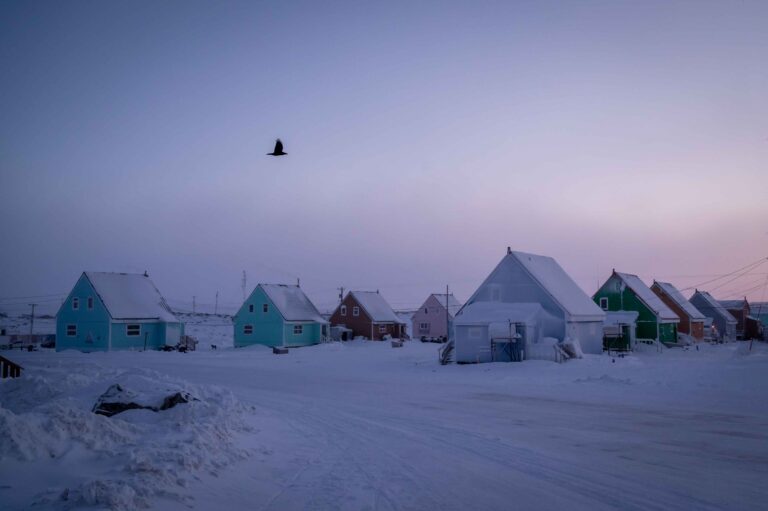
ZIYA TONG: Caribou meat is nutritious and readily available. And when it comes to food in the Arctic, that’s not always a guarantee. Nunavut makes up a whopping 2 million square kilometres of Canada, and that land is home to just 40,000 people. And all of those people are spread out across only 25 communities, none of which are accessible by road, in a landscape that doesn’t exactly lend itself to agriculture. In short, getting healthy, convenient food in Nunavut is no easy task.
PAUL OKALIK: Maybe a quarter of my fruit that I purchase at the store is spoiled by the time it gets to our part of the world. So it's not as nutritious and not as healthy as what we do consume from our traditional territories.
ZIYA TONG: It’s easy to understand why keeping caribou safe, healthy, and happy would be a top priority. Unfortunately, that’s not such an easy task.
PAUL OKALIK: I grew up going to Nattiiliaria traditionally every summer and we would go as a family and we would harvest our caribou, tuktu, for the year ahead. And when I was trying to do that with my son, who had never shot a caribou, and he was a teenager. And I brought him to our traditional areas in 2008, I realized we were in trouble, because we saw one caribou. And he couldn't catch his first caribou and he was a very frustrated young man, because I had told him all my stories of how I grew up. And he thought he was going to go catch his first caribou, but he couldn’t, because there just wasn’t enough.
ZIYA TONG: What Paul and his son saw on that hunting trip wasn’t a one time thing. In fact, all across the Arctic, caribou populations have been in trouble for a long time.
BRANDON LAFOREST: Caribou populations in northern Canada have declined incredibly over the last few decades. And there are some herds across the Canadian Arctic who have declined by 90%, 95%, 99%.
ZIYA TONG: This is Brandon Laforest. He’s the lead specialist in Arctic conservation at WWF-Canada. Unlike Paul, he didn’t grow up in the Arctic. In fact, he never went anywhere near the Arctic until he was in university.
BRANDON LAFOREST: When I was a student studying wildlife biology, I got the chance to go to Churchill, Manitoba as part of a field course. And it was really my first time in the North, and even that is only the subarctic. But I was immediately inspired and interested in everything that I saw. And I had the chance on that trip to get immersed in Indigenous culture of the region and to just get a better understanding of what's happening in the North and also the responsibility that we as a nation have for the proper conservation and management of the North.
ZIYA TONG: Since then, Brandon has been to the Arctic many times. He even lived in Iqaluit, the capital of Nunavut, for four years. And he’s spent a long time thinking and talking about the role of caribou in the region.
BRANDON LAFOREST: Caribou across the world are all the same species and it makes it really complicated for anyone to understand exactly how we talk about them. And a lot of it is things we as humans made up to try and better conserve caribou and better understand their biology.
ZIYA TONG: “Caribou” is actually the French Canadian and Mi'kmaq word for “reindeer.” And while most of us associate reindeer with Santa Claus and the North Pole, they can actually be found all over the Northern Hemisphere, from Scandinavia to Siberia to, of course, Canada. The subspecies of caribou that live in mainland Nunavut are called barren-ground caribou. They’re named after the open landscape of the tundra above the treeline. And they’ve been travelling across the Arctic for thousands of years.
BRANDON LAFOREST: They actually have the longest land migration of any mammal in the world. So sometimes we think of wildebeest on the Serengeti, but really we have the champion migrators here in Canada.
ZIYA TONG: The Bathurst Herd, for example, spends its winters in the mountain foothills of the Northwest Territories. But once spring comes around, they travel 600 kilometres to get to the Bathurst Inlet on the north coast of Nunavut. The Porcupine Herd is even more impressive. In the winter, they live in the plains of the southern Yukon. In the spring, they walk all the way to the northeastern coast of Alaska—about 2500 kilometres away!
BRANDON LAFOREST: The reason Caribou do this is to arrive essentially in the months of May and June on their calving grounds. And these are areas further north. And these are areas where caribou migrate in order to give birth.
ZIYA TONG: Calving grounds are a crucial part of caribou life. Each herd has its own calving ground that they return to, year after year.
BRANDON LAFOREST: When a caribou arrives on a calving ground, it's arriving back in the place where it was born, and it's arrived because it's pregnant and it is going to give birth to its calf.
ZIYA TONG: The herd travels to the calving grounds in May. When they arrive in early June, all the mothers in the herd give birth over the course of two weeks.
BRANDON LAFOREST: And the reason they do that is to overwhelm any predators that may have followed them onto their calving grounds. So you can imagine if there's a couple packs of wolves hanging around, they can only take so many calves at a time. And if everyone gives birth at the same time, it provides a level of safety for the herd in general.
ZIYA TONG: Calving grounds are usually remote, open areas with good visibility, few pesky insects, and limited exposure to dangerous predators.
BRANDON LAFOREST: They've chosen this…not chosen, they've been evolutionary designed to go through this migration and this life history in order to access resources, in order to access habitat. So it's important when migrating that caribou are not encountering too many disturbances, not encountering too many barriers. In order to give them free access to not only the area where they're going to spend the winter and not only the calving ground where they are going to give birth and raise their young but also along the really arduous path where caribou are transitioning between their different seasonal habitats.
ZIYA TONG: Some caribou herds have been migrating to the same calving grounds for 3000 years. And while numbers go up and down over time, the population decline of the past 50 years is different. For example, in the ‘80s, the Bathurst Herd—the one that migrates 600 kilometres across the Northwest Territories—had almost half a million individual caribou. When scientists counted the herd in 2021, that number was down to around 6000…a 99% drop in less than 50 years. So, what’s changed? Well, it’s not just the steep decline that’s alarming—it’s the conditions the caribou are facing: a warming climate, more biting bugs that carry disease, more disruption to their habitat and food sources, and more people on the landscape than ever.
BRANDON LAFOREST: The last time these herds were at this population low in the past was in the 1950s and 1960s. And the world is very different now than it was in the ‘50s in terms of climate change, but also in terms of the industrial footprint of things like roads and mines and disturbance that comes with mineral exploration all across the barren-ground caribou range.
ZIYA TONG: In the mid-20th century, developers realized that there was a lot more to the Arctic than snow and ice. Deep underground, there were rich deposits of nickel, zinc, iron, and other valuable metals. All of this interest has really sped up over the last couple of decades. And more mines means more development, and more changes than the people (and the caribou) of Nunavut have ever seen.
BRANDON LAFOREST: If we think about Nunavut, for example, there are very few roads and there are in fact no roads connecting any of the communities in the territory. So we're starting to see for the first time in Nunavut, the building of roads. And these aren't flat roads that caribou can walk up to and all of a sudden they're walking on pavement. Largely, roads in the Arctic need to be elevated in order to deal with the shifting permafrost below and in order to deal with the uneven landscape of the tundra. So there are some roads being proposed and built that have eight, nine, 10 foot barriers of rocks in order to create a safe surface for the road to operate at certain points.
ZIYA TONG: It is possible to build special caribou crossings on these roads, but it’s not guaranteed that the herd will approach the road at the right place. And even if they do, it takes time for the caribou to actually understand what they’re looking at.
BRANDON LAFOREST: Studies have shown that caribou will pause at roads and will accumulate in groups and will be unable to pass and they'll waste valuable time they should be migrating and arriving at their destination. We've seen instances of caribou deflecting off roads, which means a caribou will—we know this from collar data—will walk up to a road and then walk right back and won't cross.
ZIYA TONG: And it’s not just about roads. In 2012, Canada’s federal government approved a proposal from a corporation called Baffinland Iron Mines. They want to build a railroad to transport iron from the Mary River Mine on Baffin Island to a port 149 kilometres away. It would be the first railway ever built in Nunavut—and it would cut directly across the migration path of the South Baffin caribou herd.
BRANDON LAFOREST: The caribou herd that would be impacted by this construction largely has been in a steep decline up from a population high in the 90s of over 100,000 individuals to a population low in 2015 of around 5,000 individuals. There's encouraging signs of recovery for this herd. We're seeing more and more caribou on Baffin Island, indicating that they do have the ability to come back. But we're worried about the impact of the largest economic development project in the Canadian Arctic happening right in the nexus of the timing when caribou are recovering and the building of infrastructure that no caribou has ever encountered in northern Canada before, and what does that all mean for the health of that caribou herd, and how do we foster caribou recovery while also working towards economic development in the north?
ZIYA TONG: It’s a complicated issue. More development in the North can have a lot of positive impacts, too. It creates jobs, boosts the economy, and makes it easier to get resources like food and healthcare to remote communities. But protecting caribou is also a crucial part of supporting the people of the Arctic.
BRANDON LAFOREST: We're not advocating for zero development in the Arctic. We need economic development. We need investment in the North, but we need to take a look at the entire range of a herd of caribou and make sure that we're not overwhelming individual herds as they cross multiple roads and multiple project sites. They have a huge habitat and they have a huge range and there are certain punctuated areas and certain times where they need to be left alone and they need to be given the space to be caribou and to raise their young and there are many opportunities for economic development and there are many places where economic development would be welcome and would have minimal impact on caribou.
ZIYA TONG: For Paul Okalik, the former premier of Nunavut, all of this is all terribly ironic.
PAUL OKALIK: Even though my aboriginal right to hunt is protected constitutionally, I can't hunt my caribou on the Island today. And that right is overridden by the mining companies that just stake a claim anywhere on the lands that the caribou may be occupying, so that's the most unfortunate and unjust part of the story.
ZIYA TONG: For decades, Inuit communities and organizations like WWF-Canada have been advocating for a ban on mining claims on caribou calving grounds. It’s all part of a larger effort to finalize a land use plan that goes back to the ‘90s, when Paul and his colleagues negotiated the agreement that established Nunavut as a territory.
PAUL OKALIK: Our treaty, which promises a land use plan, was signed in 1993, in the last century. And we're still waiting for the plan to be adopted. So that's the status of our territory today.
ZIYA TONG: The proposed Nunavut Land Use Plan designates which parts of the territory are not open to oil and gas exploration and mining companies. These areas, including the traditional calving grounds of barren-ground caribou, must be kept under special protection. Like Paul said, the plan was first promised in 1993. The most recent draft was submitted to the federal government 30 years later in 2023—but it still hasn’t been approved.
PAUL OKALIK: The purpose of the plan is to identify core areas that need protection and others that can be developed if they wish. So we're not asking for a whole scale moratorium in development in the territory, just some basic protections that will allow us to sustain ourselves in the long run. So like, the minerals aren't going to fly away. They're going to stay on the ground. So it’s something that is really puzzling. Why is it being held up? Can we just move on already and protect some calving grounds?
ZIYA TONG: Paul believes that the companies that want to develop these mines, roads, and railways fundamentally don’t understand the relationship between Inuit and their land. Where the developers see the opportunity for wealth buried in the ground, Inuit see themselves as already wealthy.
PAUL OKALIK: What these companies never see is that as Inuit, these are our shares. These are our interests. Like their shareholders. We just don't put a dollar number on our shares because they're priceless. This is our food. This is our source of clothing, this our future that they're playing with. So those shares will lose incredible value for all of us in the long run if they're destroyed or damaged because these herds depend on these habitat for being able to survive. And if they have no more habitat then how are we going to survive in the long run. That's something that I dread will eventually seep into the rest of the territory if we aren't able to protect our herds.
ZIYA TONG: There’s a lot at stake here. And Inuit know they can’t wait around for the Canadian government. If they want to protect the land, they have to take matters into their own hands. That’s where the idea for Indigenous Guardians came from.
ABEL AQQAQ: I think knowledge is passed on from our ancestors up to today, so respecting, keeping the area clean, keeping the land clean, the ocean clean. That's what we like to do. We don't want any mining going on up here because it's such a small area. If they start a mining up here and it will destroy our land.
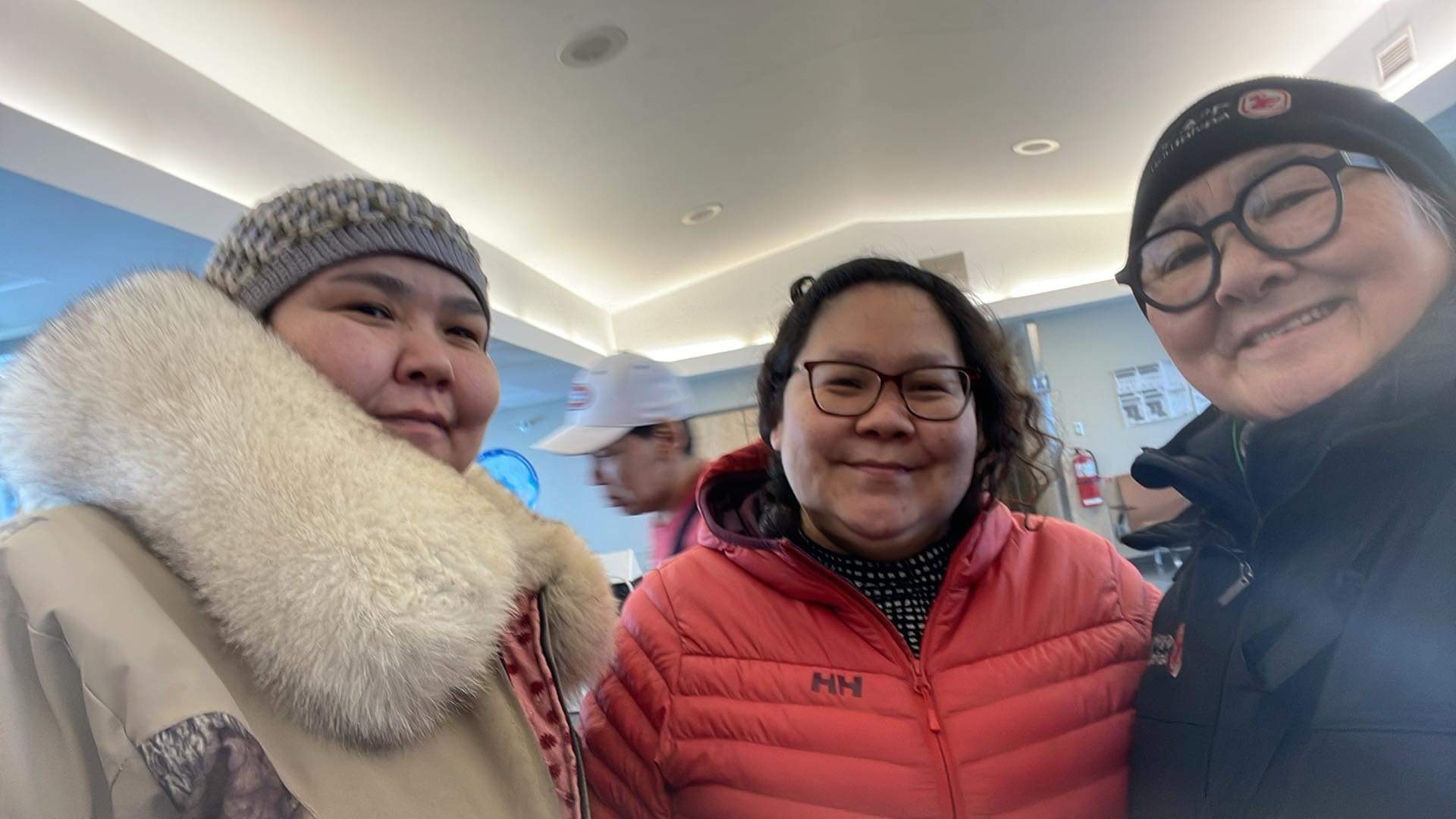
ZIYA TONG: This is Abel Aqqaq. He leads the Guardian program in Taloyoak, Nunavut. This small community is on the Boothia Peninsula, also known as the Aqviqtuuq Peninsula in the local language of Inuktitut. This makes it the northernmost community in mainland Canada, which means it’s considered very remote, even for Nunavut. Guardian programs are groups of local men of all ages working together to protect the land and support the community. The federal government started funding them in 2017, which means that Guardians get paid fairly for the work they do for their community: hunting, fishing, monitoring wildlife, and patrolling the land. The Guardian program in Taloyoak was launched in 2021. At the time, Abel was working as a teacher in the town’s only school. When the local Hunters and Trappers Organization asked him to lead the Guardians, he said yes right away.
ABEL AQQAQ: It's a good idea, it's a very, very good idea. It's really good for the community. We interact a lot about our culture with the youth. So that's the best part I like, teaching the youth.
ZIYA TONG: What makes the Guardians unique is that they combine traditional Inuit knowledge with Western conservation science.
ABEL AQQAQ: So right now we're doing marine sampling. We measure the ice, the ocean. We measure the temperature of the water. We have tools that we use to grab stuff from the ocean floor. That's very interesting. In the springtime, when the caribou migrating north to the calving ground, we put cameras where we think the caribou will be migrating through. And the camera does it automatically so it takes pictures every couple of minutes. And whatever the camera captures, we also send them down south.
ZIYA TONG: While they’re out on their patrols, the Guardians collect data to monitor the impacts of climate change and send it to be analyzed at a lab in Quebec. This also gives them the opportunity to keep an eye on safety hazards.
ABEL AQQAQ: We mark when the ocean is starting to break up slowly, the open cracks, we put danger markers on, we flag them and say, this is a spot you should not go or this is the spot you should be careful.
ZIYA TONG: While they’re taking care of these scientific and practical concerns, they’re also providing for the people of Taloyoak.
ABEL AQQAQ: We also hunt for the community that doesn't have hunting equipment, elders mostly. Whatever we catch we share our harvest to the community.
ZIYA TONG: For Abel, it’s all about supporting his community—and creating a future where the people of Taloyoak get to make their own decisions about their land. Back in 2016, the Hunters and Trappers Association of Taloyoak approached WWF-Canada with a problem. They wanted to create an Inuit Protected and Conserved Area (or IPCA) that encompassed the whole peninsula. Since then, WWF-Canada has been working to help them make this dream come true. The idea is that these 90,000 square kilometres of land and ocean, and the wildlife that live there, would be managed entirely by the Inuit who call it home. They’d be able to prohibit industrial development and create conservation jobs—all while improving food security and helping to connect community members to the land. The Guardians are the first step on the journey to making that happen. Here’s Paul Okalik again.
PAUL OKALIK: In a beautiful part for my territory it will be able to continue on our story of protecting the herd and respecting caribou country as how we've always done and respecting our way of life and setting aside those areas as conservation areas which will allow for opportunities for jobs, as guardians, as managers of those areas, and which will be able to showcase not just to Inuit but to the outside world the importance of these areas to us in the long run and to our future.
ZIYA TONG: While they work hard to make the Inuit Protected and Conserved Area a reality, the people who actually live in the far north are taking conservation into their own hands, and passing knowledge and skills on to the next generation.
ABEL AQQAQ: Well, a lot of our youth guardians are young men. A lot of them don't have their own equipment to get out or their parents don't really have the equipment to get out so it's a big chance for them to get around the land and learn. It is out on the land to survive, especially in the cold winter. I'm hoping it can go on for a long time. It's a good program. It's a very very good program for the community so it will be good for it to be ongoing on the long run.
ZIYA TONG: From Paul’s perspective, the Guardians program is a step in the right direction for Arctic conservation. But there’s still a long way to go.
PAUL OKALIK: Even though the government has not recognized some areas that are important to us, these guardians do that for us as our traditional way. We have conservation areas on our own as Inuit that we don't go hunting at. And it's not recognized by the government, by the federal government, but the Inuit themselves have been exercising it through our own laws. So we already have these conservations on our own and it would be great if the government did their part and recognized them with us.
ZIYA TONG: Many Canadians have never been to the Arctic. If you live in Vancouver, Winnipeg, Toronto, or Halifax, Nunavut might feel incredibly distant and remote. But for Inuit, it’s home. And it deserves respect.
PAUL OKALIK: A lot of times our beautiful part of the world is often described as frozen, as cold, as not meaning much to the broader population, but it's our home and will always remain our home, regardless, it doesn't matter how you describe it, it's going to remain our home and we want to stay there. I wouldn't want to move to Toronto for God's sake, so this is something that…it's our garden. It's our, like, that's where our history lies and it's part of who we are and it never leaves you. Just respect those spaces that we cherish. And because those are our shares and I'm sure that you don't want your shares devalued or go bankrupt in the long run. That's our feeling for our calving grounds and protected areas that we want to see for our future too. Qujannamiik.
ZIYA TONG: Thanks for joining us today on This Is Wild! I’m your host, Ziya Tong. To learn more about barren-ground caribou, industrial development in Nunavut, and the Indigenous Guardians, you can go to WWF.ca/thisiswild. If you enjoyed this episode, please leave us a review on your favourite podcast app, and don’t forget to share this show with your friends! And if you have any questions or suggestions for the show, you can send us an email at thisiswild@wwfcanada.org. This Is Wild is created by WWF-Canada and Antica Productions. Our executive producers are Geoff Siskind, Laura Regehr, and Stuart Coxe. This episode was written and produced by Emily Morantz. Our production team at WWF-Canada is Joshua Ostroff, Erin Saunders, and Tina Knezevic. Nicole MacAdam is WWF's VP of Comms. Mixing and sound design by Philip Wilson.

Ziya Tong is an award-winning science journalist, known for making complex ideas accessible and engaging. She hosted Discovery Channel’s flagship show Daily Planet and has appeared on PBS, CBC and CTV. A passionate advocate for the planet, Ziya serves on the board of WWF-International, is the author of The Reality Bubble, about environmental blind spots, and co-director of the documentary Plastic People: The Hidden Crisis of Microplastics.